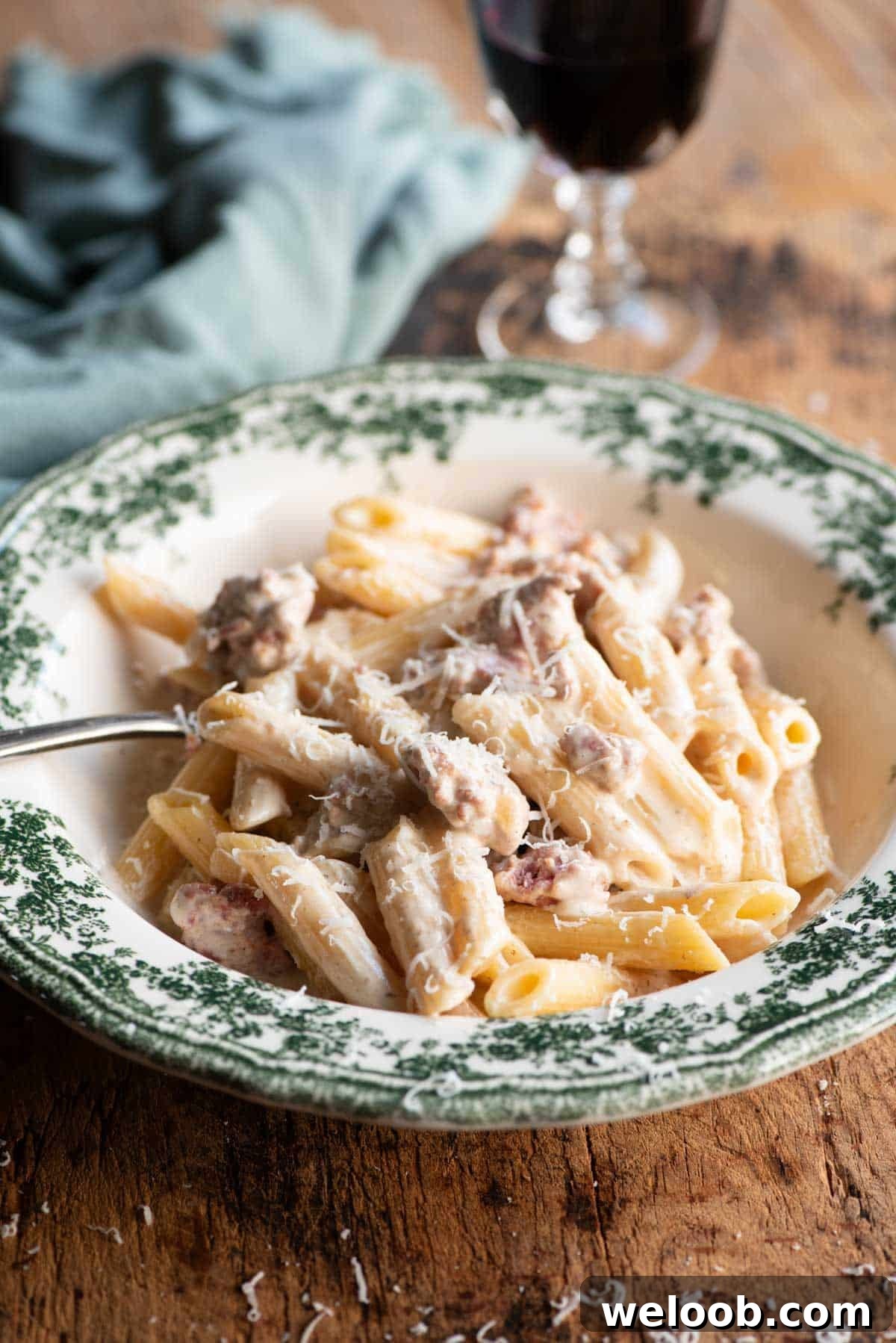
Pasta alla Norcina is a luxurious, deeply satisfying pasta from Umbria. Traditionally made in Norcia with pork sausages and black truffle, this version pairs Italian sausage and white wine with a creamy truffle sauce, finished with a generous grating of Pecorino. It’s indulgent, full of flavour and can be on the table in about 30 minutes.
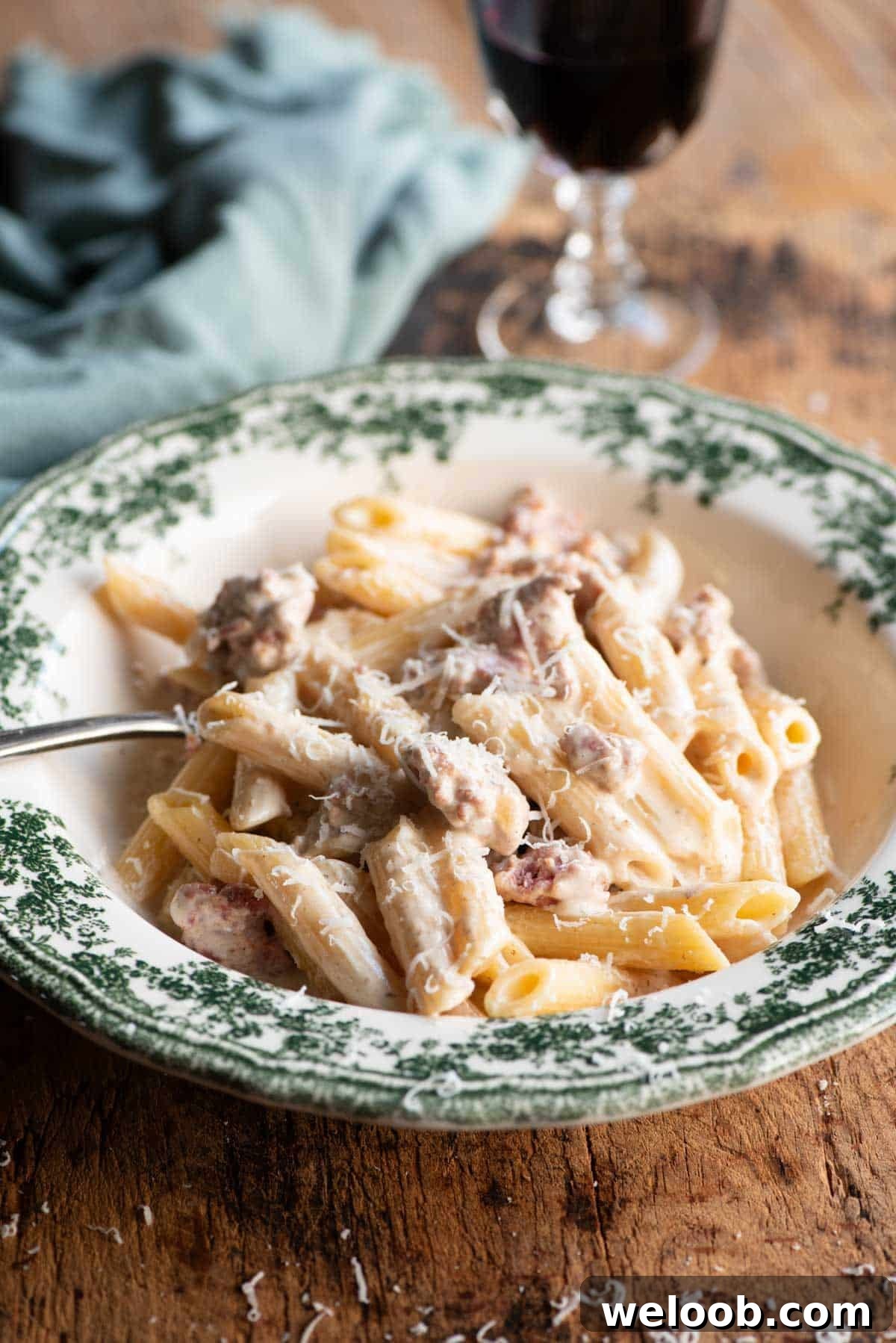
Pasta alla Norcina is pure comfort food. It originates in Norcia, a small Umbrian town renowned for its pork butchery and cured meats. The term ‘Norcino’ in Italy refers to a skilled butcher from that area, celebrated for crafting regional sausages and cured specialities.
While authentic Norcia sausages can be hard to find outside Italy, using good-quality mild Italian sausages (avoid spicy varieties) will give you an excellent result. The combination of savory sausage, wine, cream and truffle makes for an irresistible sauce that clings beautifully to short pasta like penne or rigatoni.
Umbria is also famous for its black truffles, which elevate this dish. If fresh truffle is available, grate it over each serving for the best aroma and flavour. If not, truffle paste or truffle oil (white or black) will work—add these sparingly and adjust to taste, as intensity varies between brands.
A useful technique is to let the sausage and onion caramelise slightly before deglazing with wine; scraping the browned bits off the pan will add a lot of depth to the sauce. Serve the finished pasta with plenty of Pecorino and a glass of your favourite white wine.
Ingredients
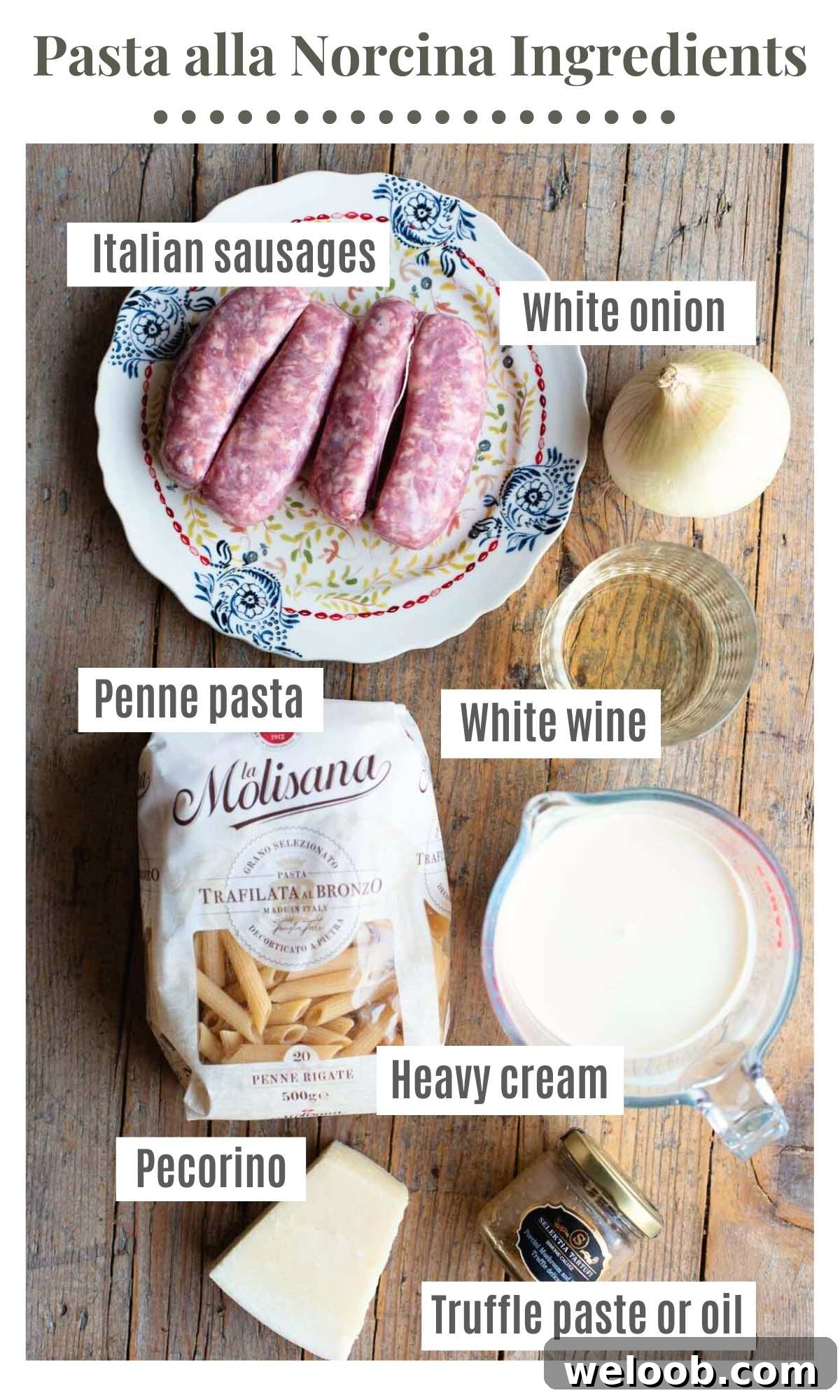
Ingredient notes and substitutions
- Pasta – choose a quality short pasta like penne or rigatoni; penne is commonly used and holds the sauce well.
- Italian sausages – authentic Norcina sausages are ideal but rare outside Italy. Use good-quality mild Italian sausages and avoid spicy or fennel-forward varieties that will change the character of the dish.
- White wine – a dry Italian white such as Pinot Grigio works well. Use a drinkable wine rather than cooking wine for best flavour.
- Truffle – fresh black truffle is traditional; if unavailable, use truffle paste or oil and add gradually to taste so it doesn’t overpower the other components.
- Pecorino – Pecorino Romano or Staginato is ideal; Parmigiano Reggiano is an acceptable substitute if needed.
Visual walk-through of the recipe
This visual guide highlights the main steps. For full measurements and detailed instructions, see the recipe card below.
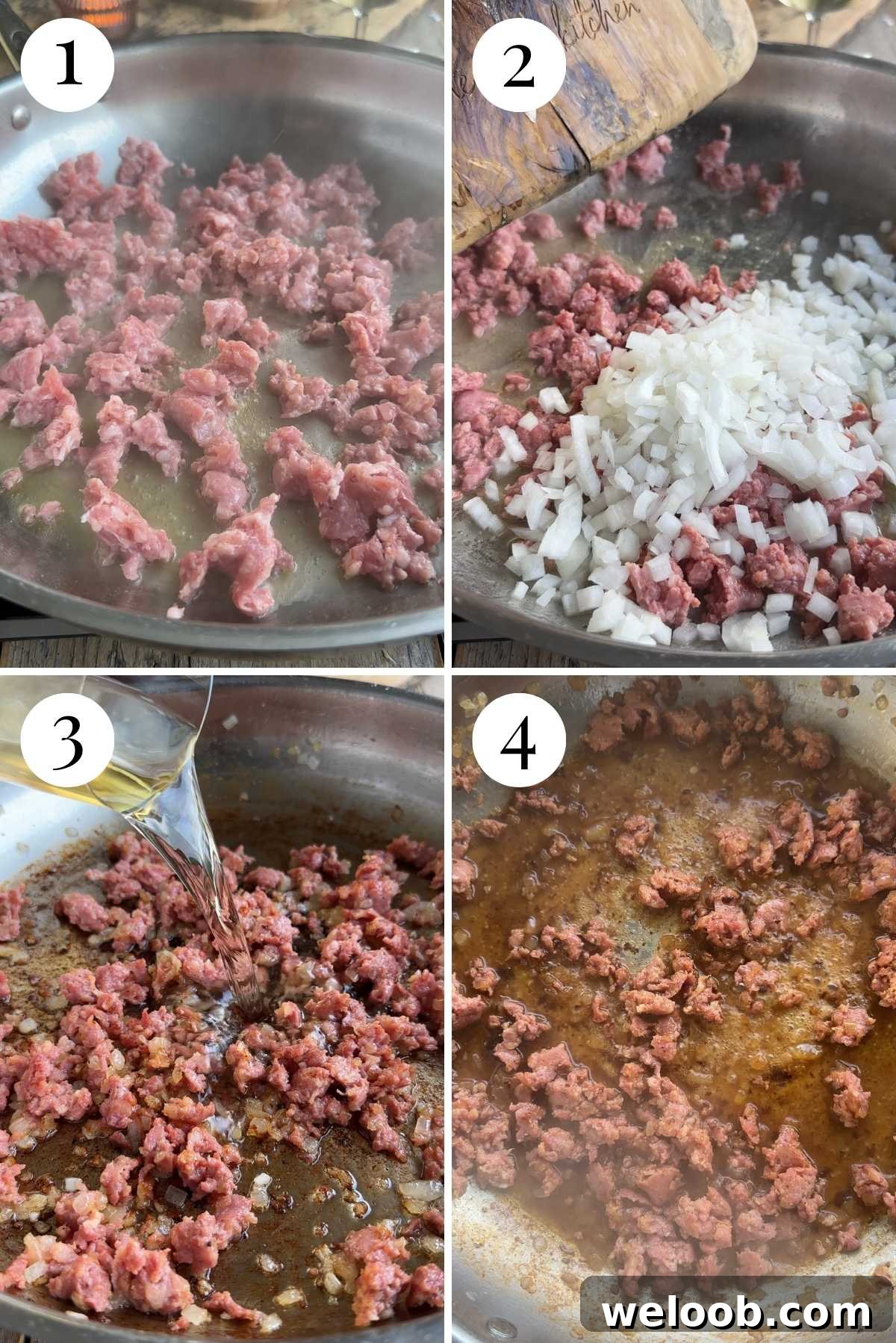
- Brown the sausage – remove the sausages from their casings and brown them in a pan, breaking them up with a wooden spoon (photo 1).
- Add onion – add finely chopped onion and sauté with the sausage until the mixture is caramelised and beginning to turn golden (photos 2 and 3).
- Cook the pasta in plenty of salted boiling water until al dente.
- Deglaze – add the white wine to the pan and scrape up the brown bits; let the wine reduce by about half (photos 3 and 4).
- Add the cream – pour in the cream and simmer gently for a few minutes. Stir in Pecorino, then add truffle paste or oil a little at a time and taste; the truffle should enhance rather than dominate (photos 5–7).
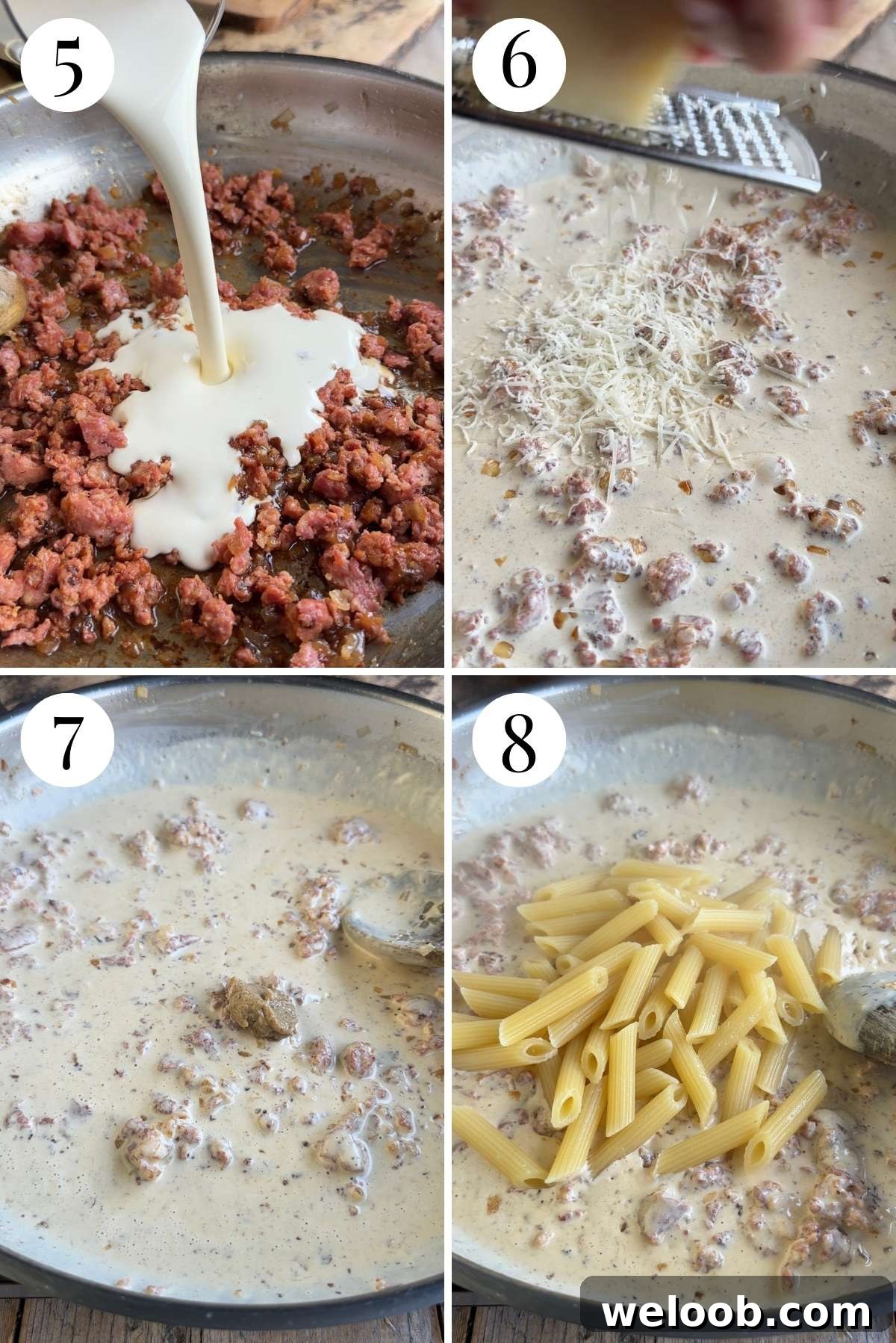
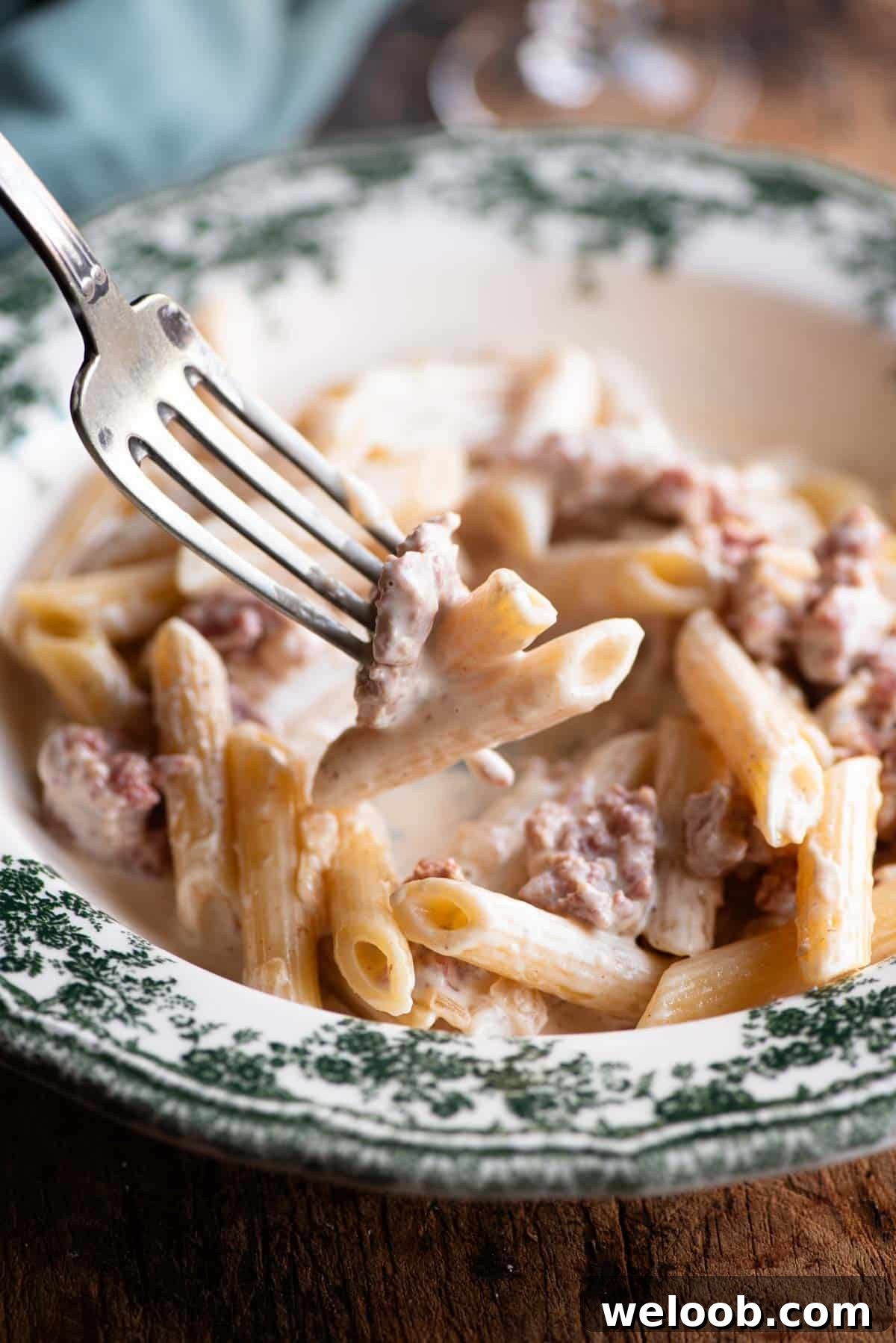
- Combine – toss the cooked pasta with the sauce until evenly coated, then serve in bowls topped with more grated Pecorino (photo 8).
More Italian comfort food recipes
Mains
Zuppa alla Valpellinese (Cheese and Cabbage Casserole)
Pasta
Pasta alla Zozzona (A Roman Classic)
Soups
Butternut Squash Pasta Soup with Crispy Pancetta
Soups
Minestra di Riso (Italian Rice Soup)
If you try this Pasta alla Norcina recipe, please rate it and leave a comment to let us know how it turned out. I love hearing from readers! You can also follow the blog on social channels or sign up for the newsletter to receive new recipes.
Step By Step Photos Above
Most of our recipes include step-by-step photos, helpful tips and sometimes video to guide you through the process.
Pasta alla Norcina
By Emily
Ingredients
- 14 oz (400g) Penne pasta
- 4 Italian sausages, (around 350g/12oz)
- 1 white onion, finely chopped
- ½ cup (125ml) white wine
- 1 and 1/2 cups (340g) heavy (double) cream
- truffle paste or truffle oil, to taste
- Pecorino Romano
- salt
Instructions
-
Bring a large pot of water to a rolling boil and salt it well. Finely chop the onion.
-
Heat a large pan over medium heat. Remove sausages from their casings and brown the meat for 2–3 minutes, breaking it up with the side of a wooden spoon.
-
Add the chopped onion and sauté with the sausage until the onion softens and starts to caramelise, about 7–8 minutes. Keep the heat moderate to avoid burning.
-
When the onion is ready, add the pasta to the boiling water and cook until al dente.
-
Pour the white wine into the pan and scrape up any browned bits from the bottom; let the wine reduce by half.
-
Add the cream and bring the sauce to a gentle simmer while the pasta finishes cooking.
-
Stir in truffle paste or a small amount of truffle oil, tasting as you go. The truffle should complement, not dominate, the sauce.
-
Grate Pecorino into the sauce, add the drained pasta, and toss to coat thoroughly.
-
Serve immediately with extra grated Pecorino on top.
Notes
- Top tip – caramelising the onion and sausage together adds depth. Deglaze with wine and scrape up the browned bits to enrich the sauce.
- Truffle – grate fresh black truffle over each bowl if you have it. If using truffle paste or oil, add little by little and taste to prevent overpowering the dish.
- Sausage choice – avoid sausages with fennel or chilli flakes unless you want those flavours to come through.
- Leftovers – this cream-based sauce is best eaten fresh. Store leftovers in the fridge and reheat gently in a pan with a splash of water to loosen the sauce.
- Freezing – freezing this pasta is not recommended, as the texture and sauce quality suffer.
Helpful Info for All Recipes
- Extra virgin olive oil is used throughout unless stated otherwise.
- When using canned tomatoes, the author prefers brands that preserve flavour; however, this recipe does not require canned tomatoes.
- Vegetable sizes are assumed medium unless noted.
- Recipes are tested using a fan (convection) oven where relevant.
- Nutrition information provided is an approximation.
Nutrition
Nutrition information is automatically calculated and should be used as an estimate.