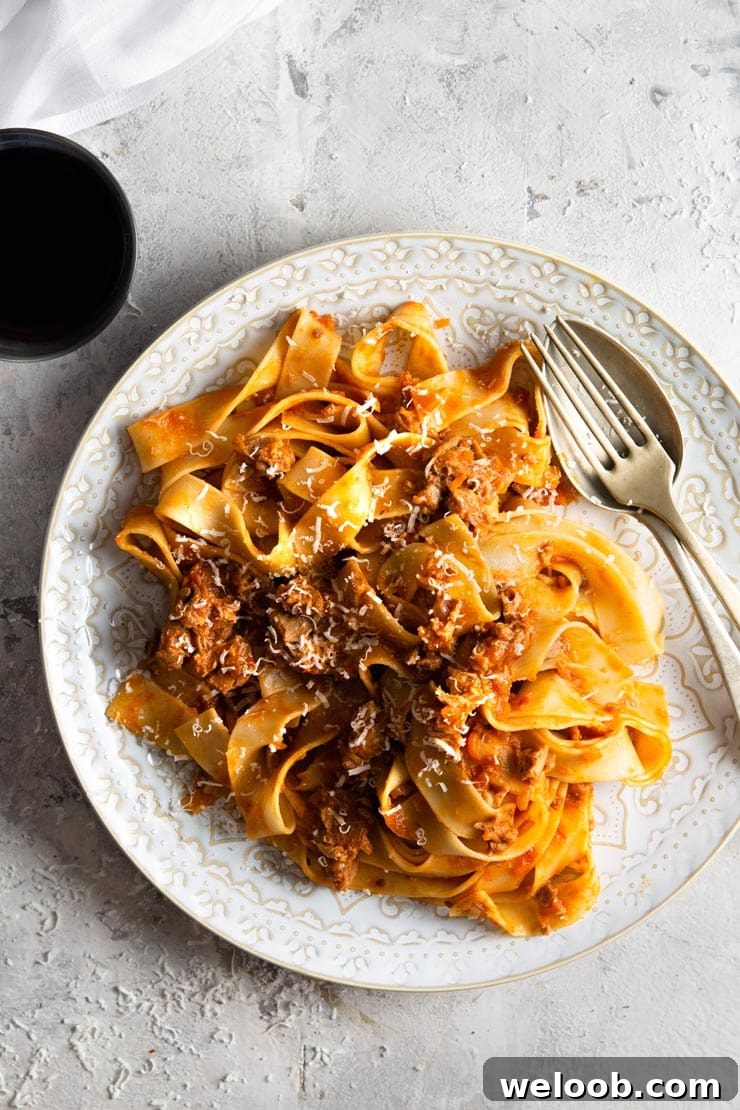
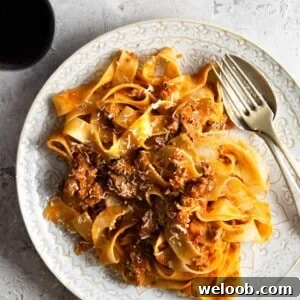
A rich Venetian duck ragu flavored with cinnamon, orange and white wine, tossed with pappardelle. This elegant pasta feels festive yet works year-round — comforting, simple to prepare and always impressive.
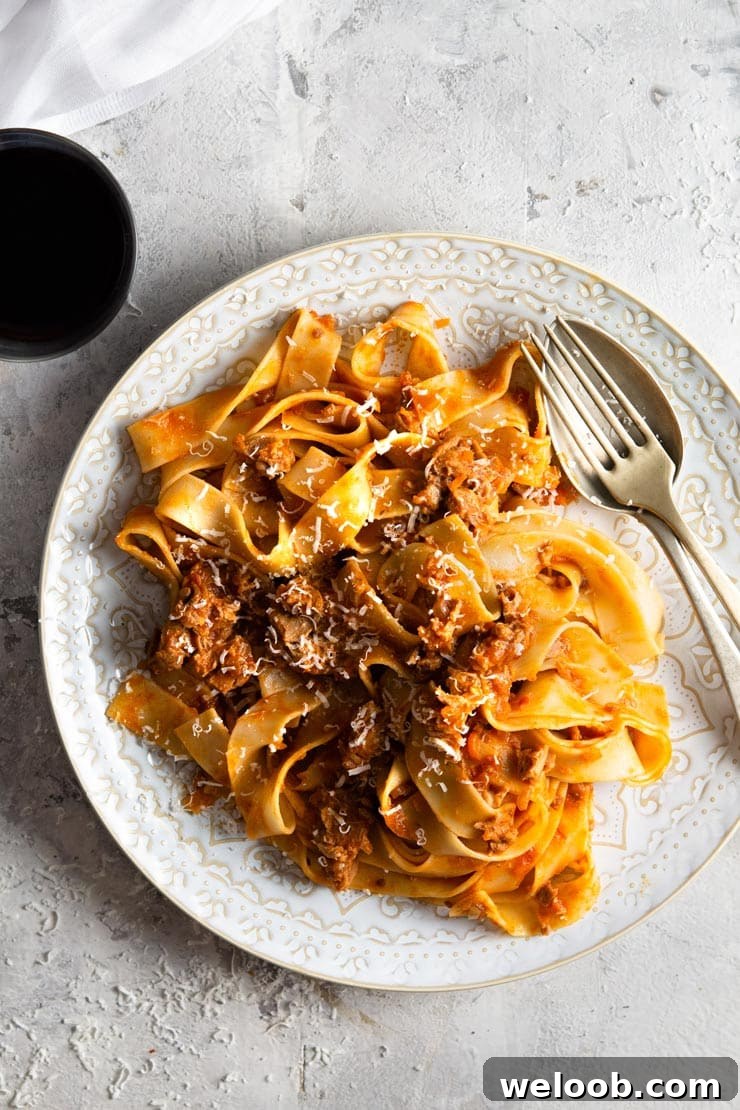
This duck ragu is what I reach for when I want something a little special. Venetian cooking often pairs cinnamon and orange with savory dishes, giving them an aromatic, slightly unexpected lift. The warming spices are subtle here — not sweet — but they add a distinct, delicious note that sets the sauce apart.
Traditionally served with pappardelle, the sauce is silky, rich and utterly moreish. It’s perfect for curling up with a big bowl or for serving family-style at a dinner. You can also use the ragu to make a luxuriant lasagne — imagine a bubbling duck ragu lasagne on a Sunday afternoon.
What Does Duck Taste Like?
Duck has a pronounced but not overpowering flavor, a touch gamey and slightly sweet. It’s dark meat similar to chicken or turkey dark meat rather than beef. It’s versatile and deeply satisfying — this ragu is a favourite way to highlight duck’s rich flavour.
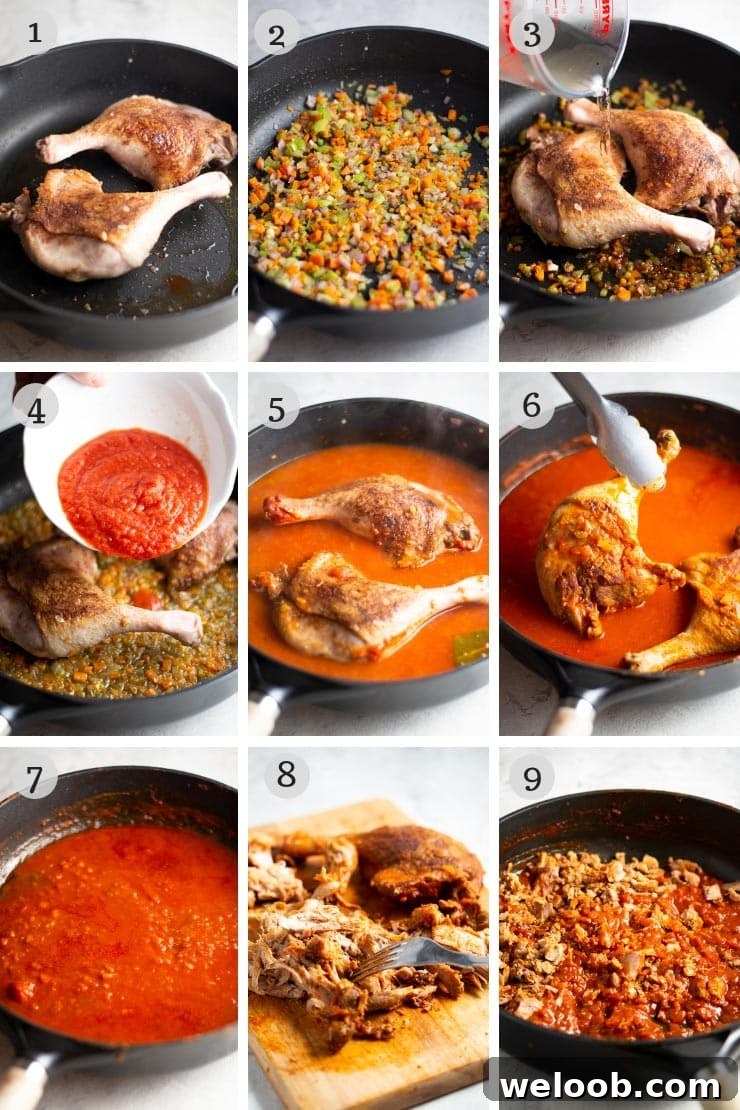
How To Make Duck Ragu – Step By Step
Season the duck with salt and pepper, then rub it all over with 1/2 tsp cinnamon. Sear skin-side down in a large pan with a little olive oil over medium-low heat for 7–8 minutes per side until browned, then transfer to a plate.
In the same pan add 1 tbsp olive oil, then the finely chopped carrot, onion and celery, the orange zest, bay leaf and another 1/2 tsp cinnamon. Sweat gently for about 10 minutes, stirring often, until the vegetables are soft.
Return the duck to the pan and pour in the white wine. Reduce the wine by half, then add the orange juice, passata (pureed tomatoes), tomato paste and chicken stock. Stir to combine, then simmer gently, uncovered, for about 2 hours, turning the duck halfway through. If the sauce reduces too much, add more stock or water.
When the duck is tender and the sauce is thick and rich, remove the pan from the heat and transfer the duck legs to a chopping board. Let them rest for 10 minutes, then shred the meat from the bones with a fork and roughly chop. Return the shredded meat to the sauce and reheat while you cook the pasta.
Bring a large pot of salted water to a boil and cook the pappardelle according to package instructions. Use tongs or a spider to transfer the pasta directly to the ragu, reserving a little cooking water in case the sauce needs loosening. Toss to coat and serve in bowls with freshly grated Parmesan.
What Pasta To Serve Your Ragu With
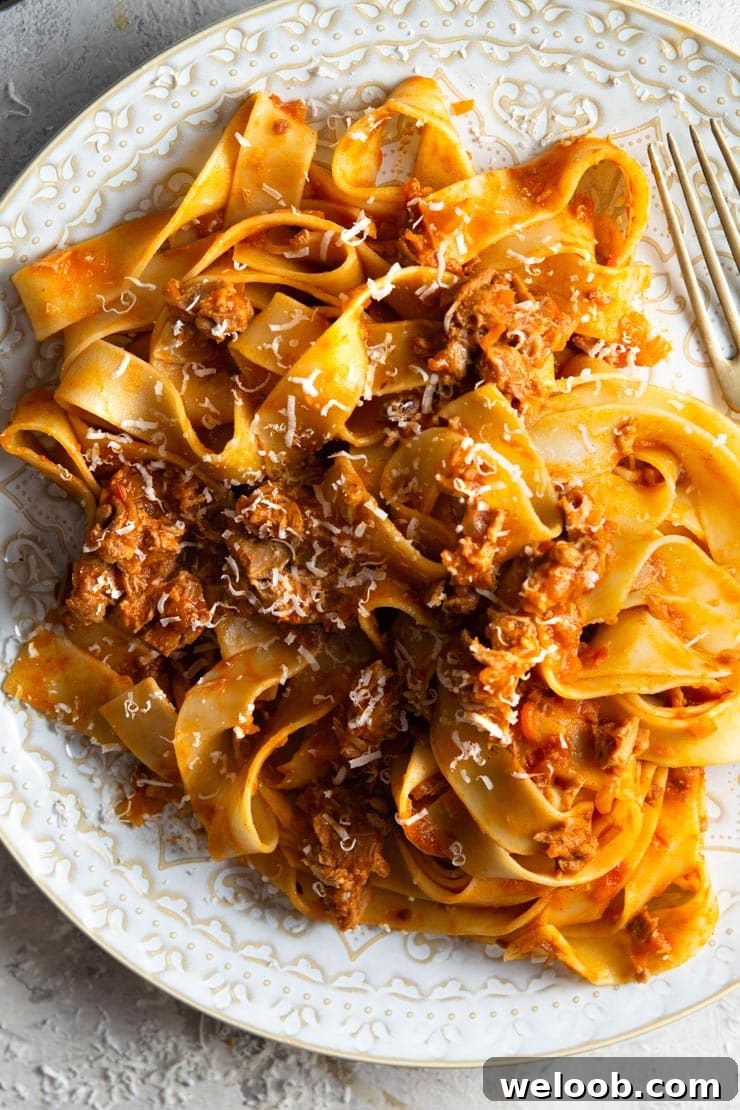
Pappardelle is ideal because its broad ribbons hold the rich sauce. Other good options include tagliatelle, pici or rigatoni. You can use high-quality store-bought pasta or make fresh pasta if you prefer. The ragu also works beautifully over creamy polenta or layered into lasagne in place of a beef ragu — use only a small amount of Parmesan in the béchamel to avoid overpowering the duck.
Tips For Making Duck Ragu
- Sear the meat first to lock in juices and add flavour; crisp the skin before simmering.
- Take your time sweating the vegetables — this is where much of the sauce’s depth develops. Keep the heat low.
- Let the duck rest before shredding so the meat remains tender.
- If you dislike cinnamon you can omit it, but it does enhance the duck’s flavour subtly.
- Season the duck well with salt and pepper and taste the finished ragu, adjusting seasoning as needed.
- Use good-quality stock (homemade if possible). Commercial stocks can be salty, so taste before adding extra salt.
- Choose a high-quality pasta brand or make your own for the best texture and mouthfeel.
More Ragu Recipes You Might Like:
- Genovese Sauce – La Genovese Napoletana
- Easy Sausage Ragu with Ricotta Gnocchi
- Italian Beef Ragu – A Classic Recipe
- Lentil Ragu Lasagne
If you try this Venetian Duck Ragu, let me know how it turns out in the comments — I love hearing from readers.
Step By Step Photos Above
Most of our recipes come with step by step photos, helpful tips and tricks to make it perfectly first time and even video!
Venetian Duck Ragu with Pappardelle Pasta
By Emily
Ingredients
- 2 large duck legs
- 1 carrot, finely chopped
- 1 onion, finely chopped
- 1 stick celery, finely chopped
- 1/2 orange zest
- 1/2 juice of 1 orange
- 1 tsp cinnamon
- 1 cup (150g) passata (pureed tomatoes)
- 1 heaped tbsp tomato paste
- 2/3 cup (150ml) white wine
- 5 cups (1.2 litres) chicken stock
- salt and pepper
- 1 bay leaf
- 2 tbsp olive oil
- 14 oz (400g) pappardelle pasta
- parmesan, for serving
Instructions
-
Season the duck with salt and pepper then rub it all over with 1/2 tsp cinnamon. Sear it skin down first in a large pan with a little olive oil on a medium to low heat for 7-8 minutes on each side until browned, set aside on a plate.
-
Add 1 tbsp of olive oil to the same pan, add the chopped carrot, onion and celery, orange zest, bay leaf and 1/2 tsp cinnamon and saute slowly for 10 minutes, stirring often until the vegetables are soft.
-
Add the duck back to the pan and add the wine, reduce the wine by half then add the orange juice, passata, tomato paste and stock. Stir to combine and simmer slowly uncovered for 2 hours, turning the duck halfway through. If the sauce reduces too much add more stock or water.
-
Turn off the heat and remove the duck legs. Let rest for 10 minutes, then shred the meat from the bones with a fork. Roughly chop and add back to the sauce, reheating gently while you cook the pasta.
-
Cook the pappardelle in a large pot of salted boiling water to packet instructions. Transfer the pasta to the ragu with tongs, reserve some pasta water if needed to loosen the sauce. Toss to coat and serve with grated Parmesan.
Video
Notes
- Searing locks in moisture and adds flavour; crisp the skin before simmering.
- Sweat the vegetables slowly to develop depth — don’t rush or overheat.
- Allow the duck to rest before shredding to keep the meat tender.
- Cinnamon is optional but recommended for a subtle aromatic lift.
- Taste and adjust seasoning at the end, especially if using store-bought stock.
- Choose a high-quality pasta or make your own for best texture.
Helpful Info for All Recipes
- I always use extra virgin olive oil in my recipes unless stated otherwise.
- When using canned or jarred tomatoes I prefer well-known quality brands for consistent flavour.
- All vegetables listed are medium-sized unless noted.
- All recipes are tested using a fan (convection) oven where applicable.
- Nutrition information is automatically calculated and should be used as an approximation.
Nutrition
Nutrition information is automatically calculated, so should only be used as an approximation.