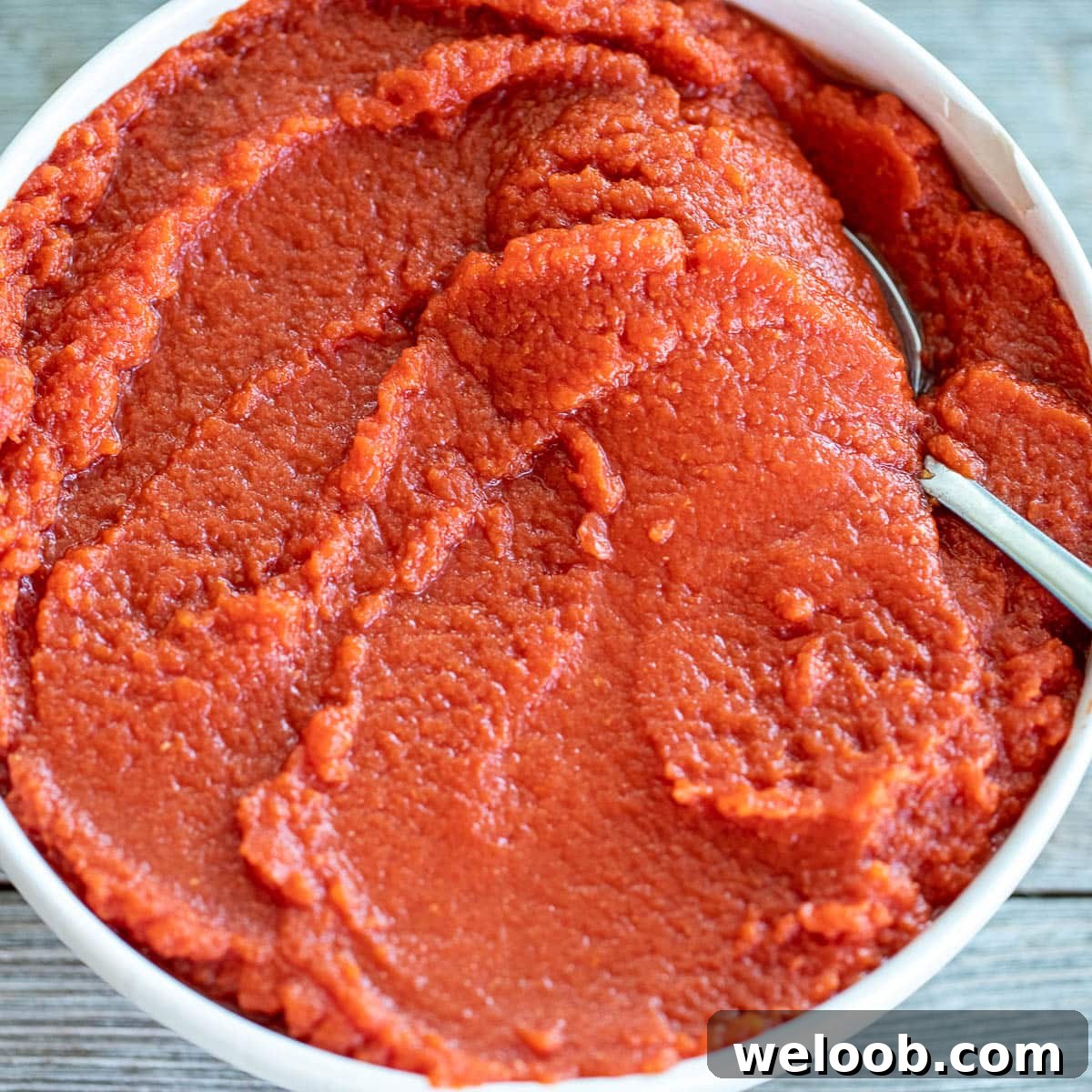
The flavor of this Homemade Tomato Paste far surpasses store-bought varieties, and you only need one ingredient: fresh tomatoes.
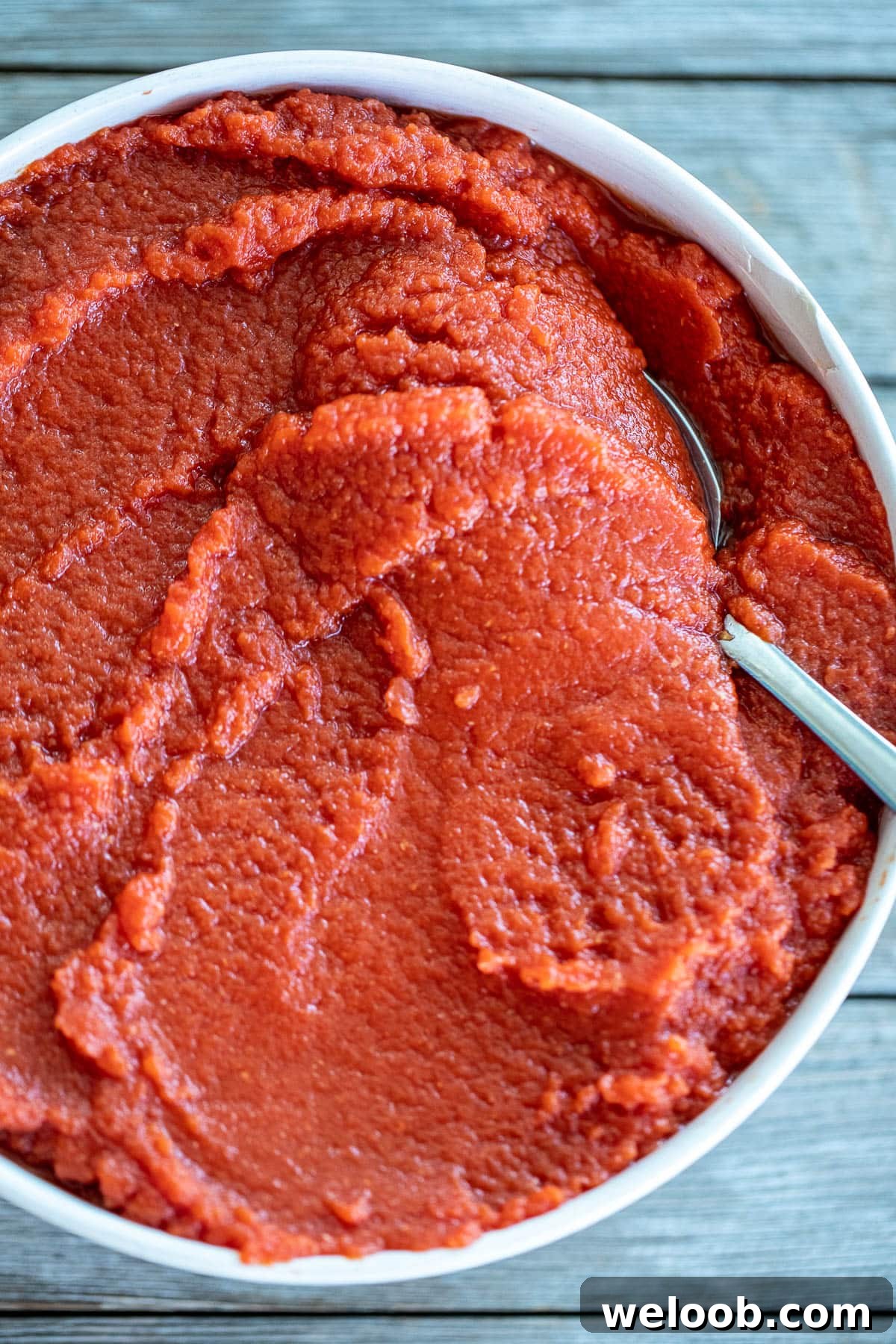
My garden has an abundance of tomatoes this season. After going from gardening failures to a bumper crop, I’ve used pounds of tomatoes in stews, pastas, and vegetable dishes and still had plenty left. Homemade tomato paste is the perfect solution for preserving that harvest.
This recipe yields about 2 pounds of tomato paste, much more than a small can, and delivers a deep, concentrated tomato flavor that’s perfect for sauces, stews, pizza, and soups.
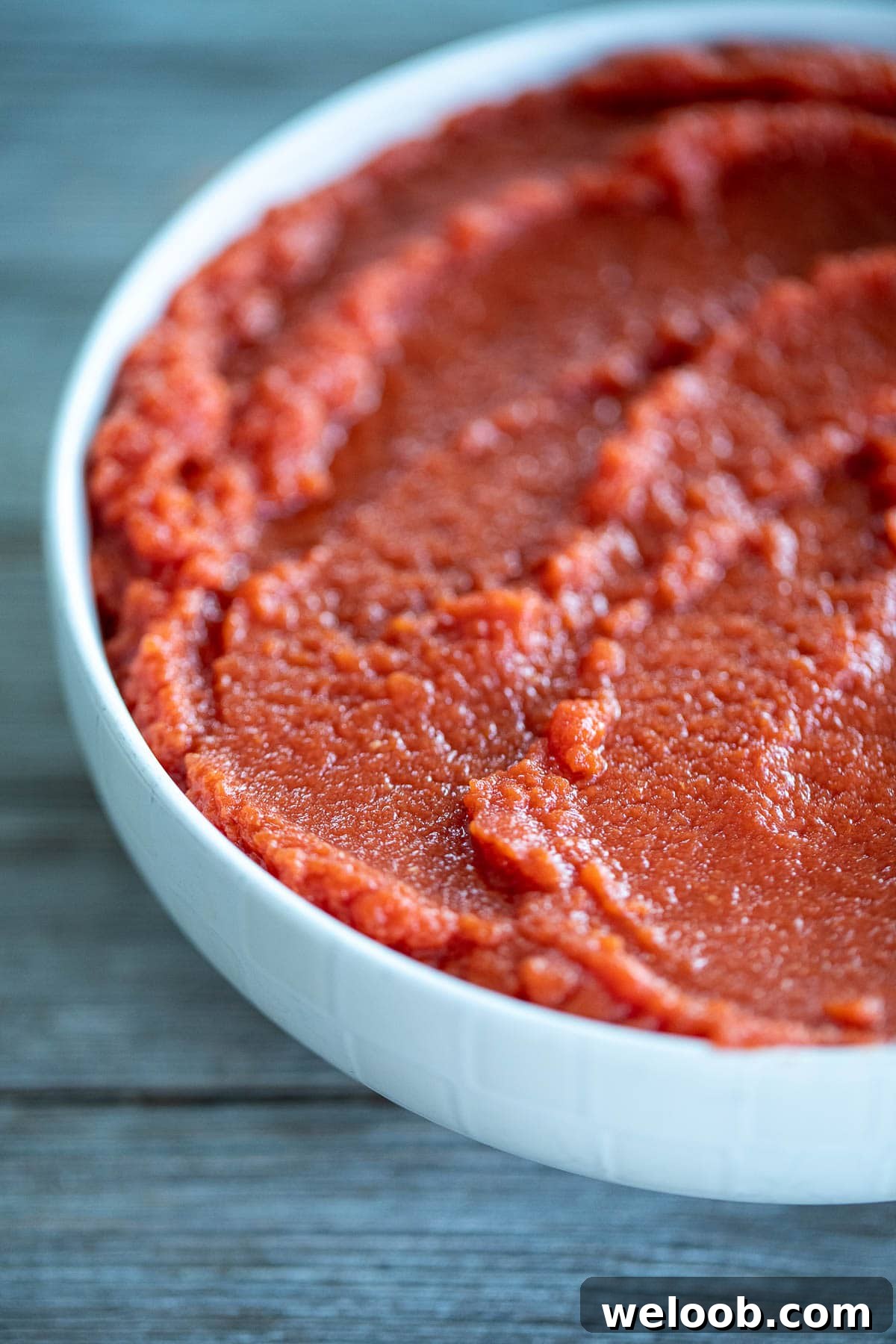
Whether your excess tomatoes come from a store, farmers’ market, or your own garden, tomato season makes this an easy project. If you enjoy tomato-forward recipes, try this paste in roasted tomato and garlic soup or as a pizza sauce base.
The resulting paste is thick, richly flavored, and incredibly versatile. It’s easy to make and simple to store—so gather your tomatoes and get started.
Table of Contents
- The 1 Ingredient You Need
- 4 Simple Steps For Making The Best Tomato Paste
- Watch How To Make Homemade Tomato Paste
- Flavor Variations
- Expert Tips
- No Special Equipment For Tomato Paste
- How To Store It
- Recipe Frequently Asked Questions
- More Tomato Recipes To Try
- Homemade Tomato Paste Recipe
The 1 Ingredient You Need
This recipe calls for only fresh tomatoes. Choose varieties with plenty of pulp for best results—Roma or San Marzano are ideal, but other meaty tomatoes like Early Girl will work.
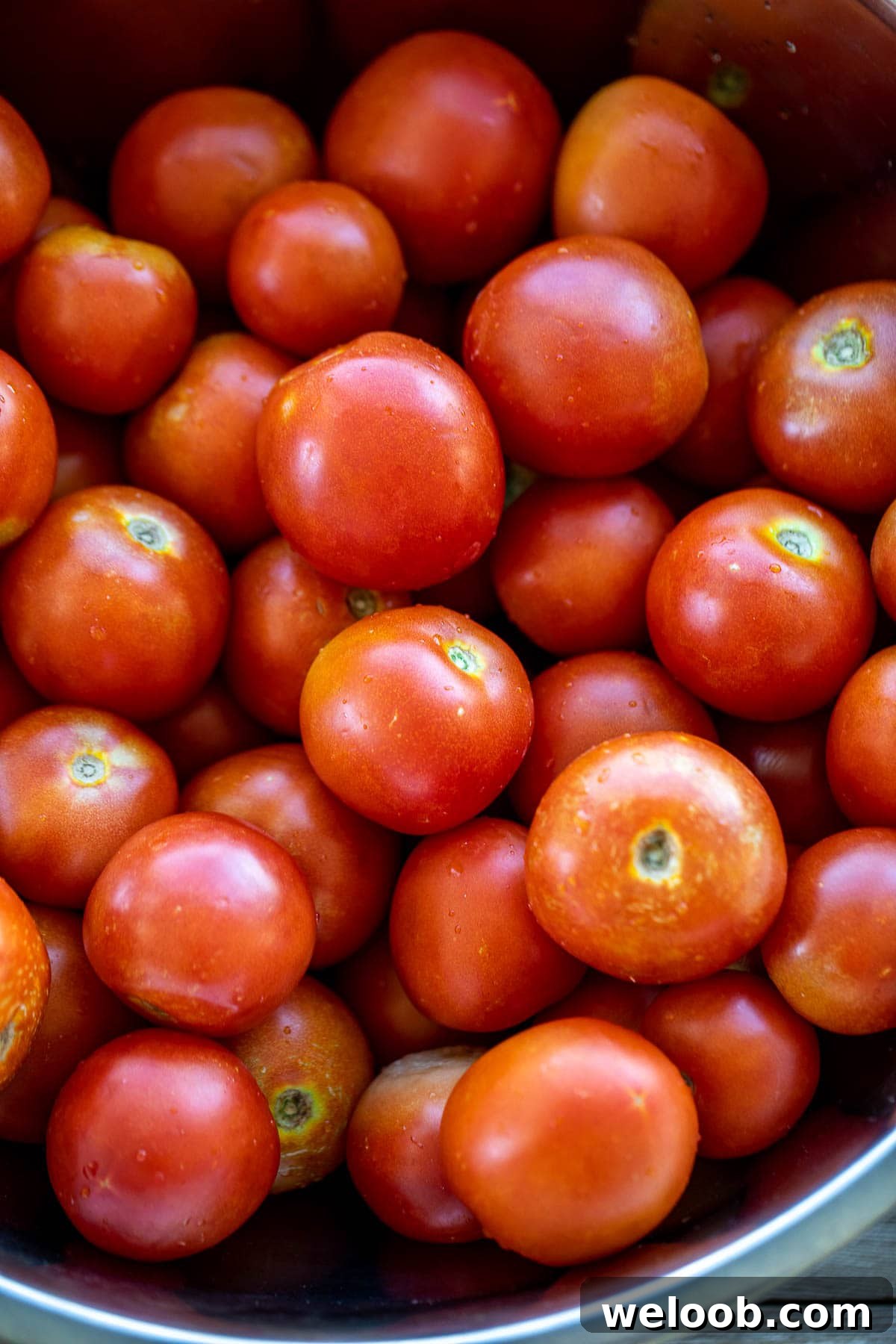
Some cooks add a little olive oil, lemon juice or citric acid, and salt, but I prefer to keep this paste simple and unsalted. It’s better to season dishes when you use the paste rather than pre-salting it. This one-ingredient method preserves the natural balance of acidity and sweetness in the tomatoes.
4 Simple Steps For Making The Best Tomato Paste
The process is straightforward and mostly hands-off. Prep takes about 30 minutes; cooking to a thick paste takes a couple of hours depending on how watery the tomatoes are.
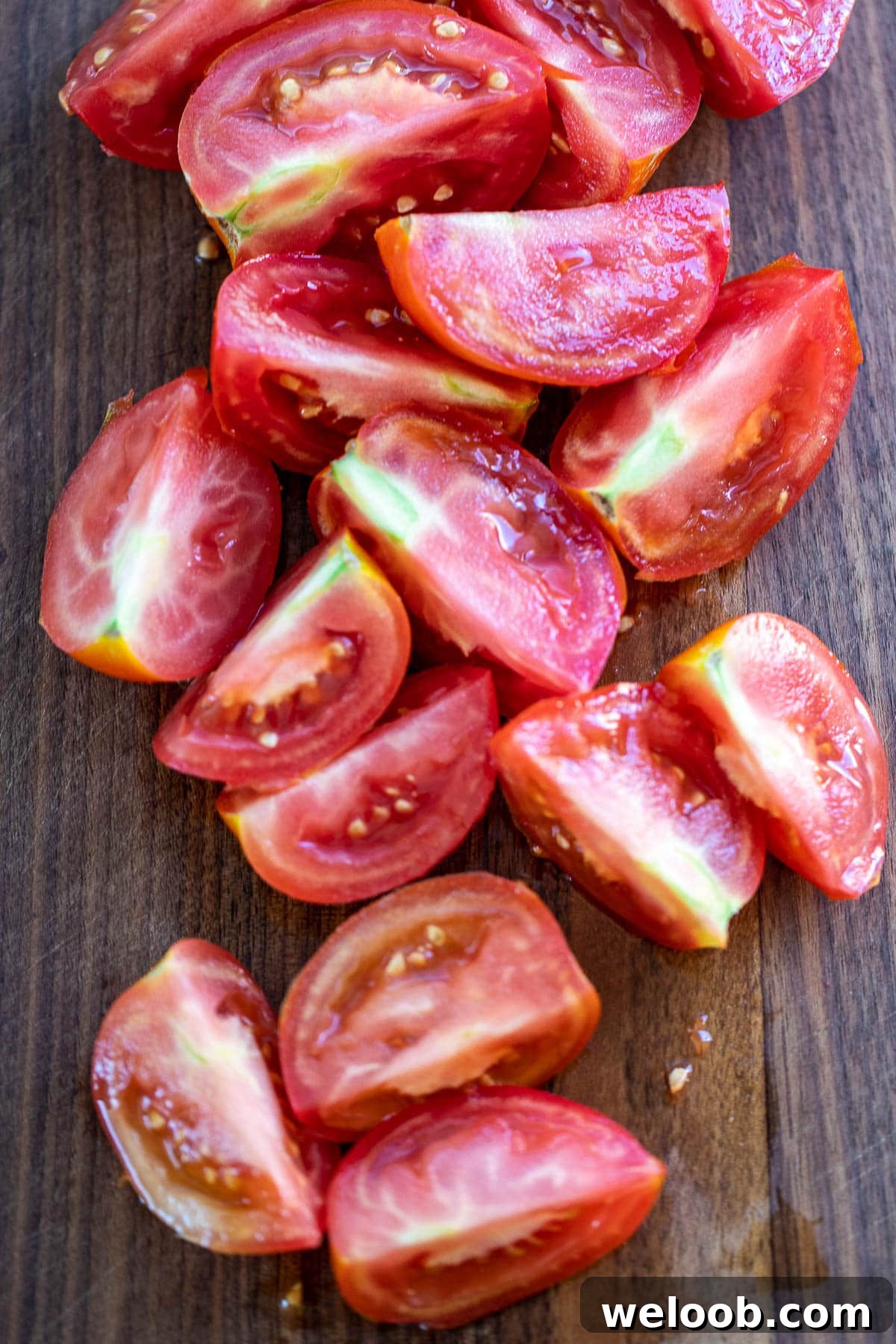
1. Cut room-temperature tomatoes into quarters after rinsing them. You don’t need to remove the skins.
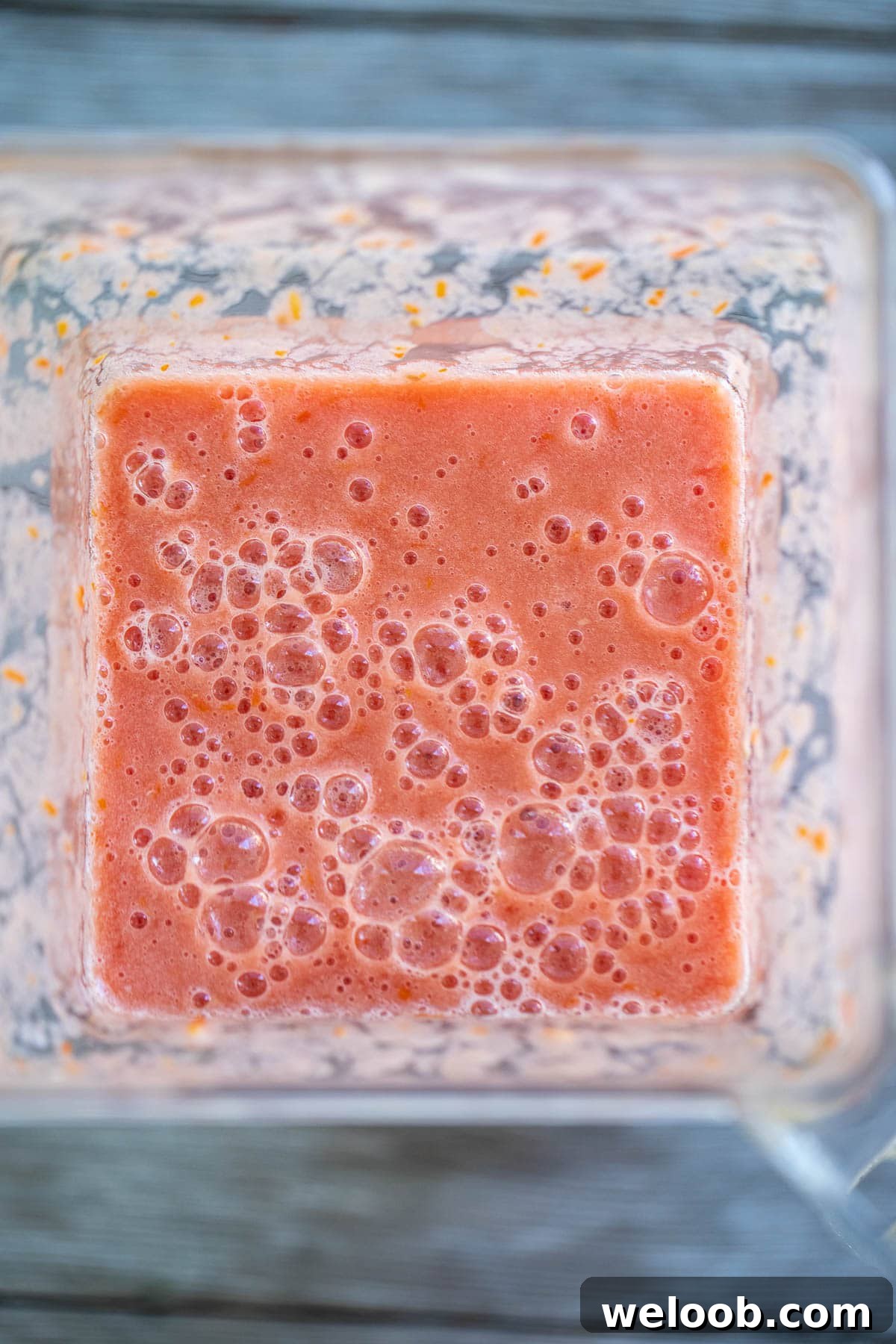
2. Blend the tomatoes into a purée, working in batches if necessary.
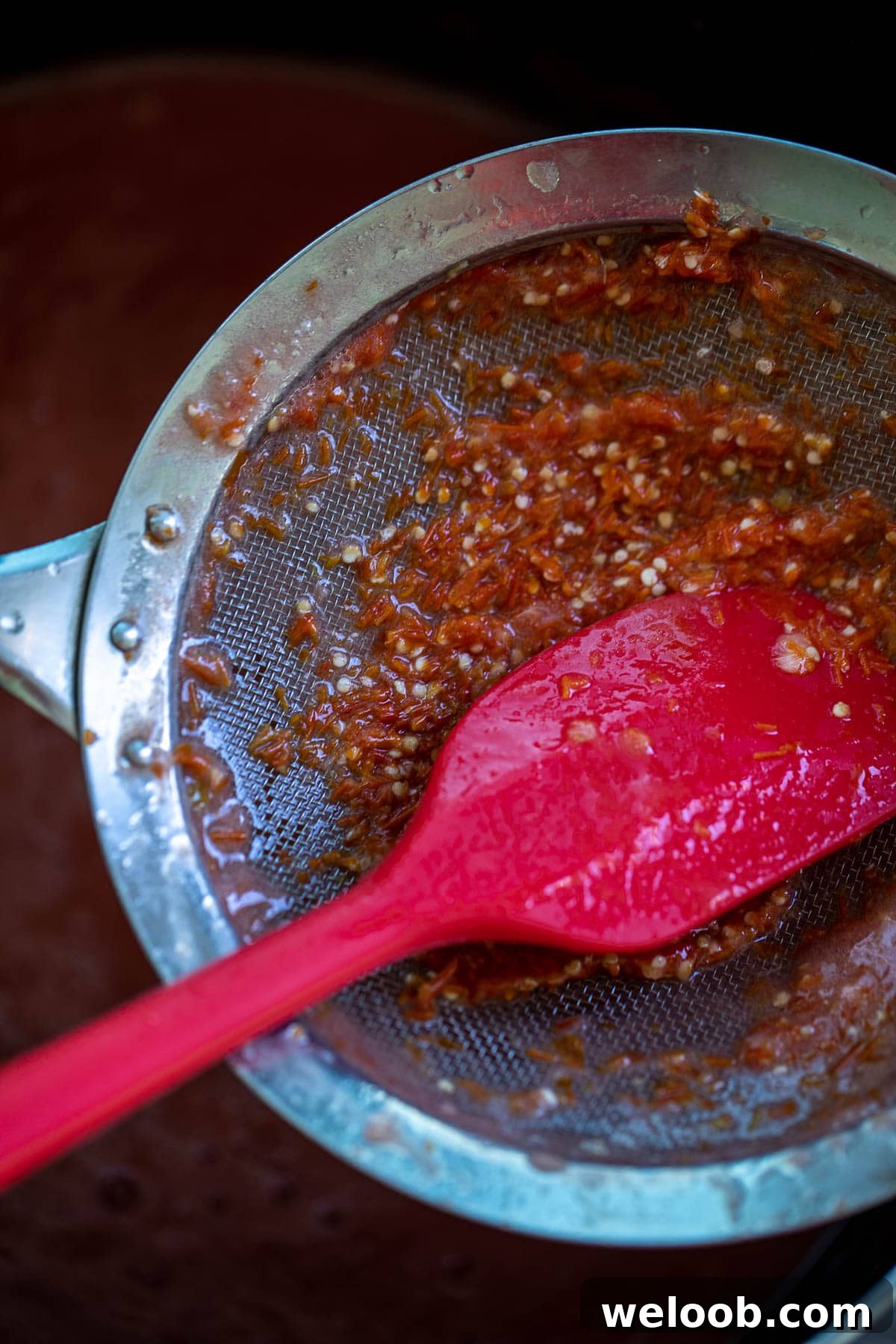
3. Strain the purée through a fine-mesh sieve to remove seeds and remaining bits of skin for a smooth paste.
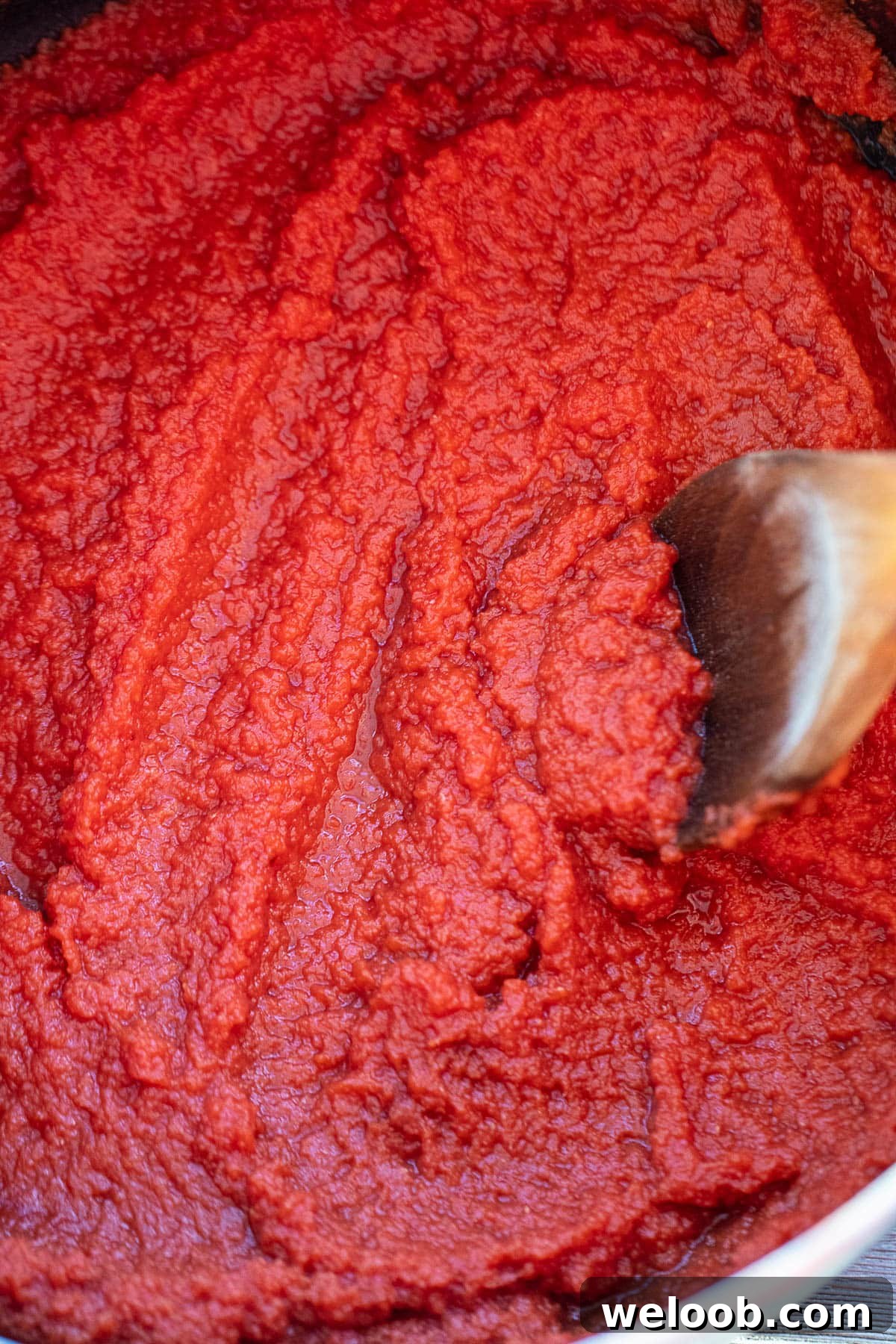
4. Cook the strained purée in a large pot over medium heat until most of the water has evaporated and it thickens into a paste. Lower the heat as it reduces to avoid burning and stir occasionally until you reach the desired consistency.
Hint: Straining gives a smoother, canned-like appearance. Leaving seeds in won’t necessarily make the paste bitter, so it’s a matter of preference.
Watch How To Make Homemade Tomato Paste
Flavor Variations
Customize the paste with additional flavors:
- Roasted: Roast tomatoes until slightly charred for a smoky depth, then blend and reduce.
- Spicy: Blend in a scotch bonnet or habanero for heat.
- Herby/Garlicky: Add garlic, basil, or thyme while blending for an aromatic paste.
Feel free to experiment with any flavors you like.
Expert Tips
- Use fresh tomatoes for the best flavor and texture; avoid canned tomatoes for this recipe.
- You can finish the reduction in a slow cooker—set it low and let the water evaporate slowly with minimal stirring.
- Turn leftover paste into ketchup by adding vinegar, a little sugar, and seasonings to taste.
- As the liquid reduces, lower the heat to prevent scorching and an off taste.
No Special Equipment For Tomato Paste
All you really need is a blender or food processor and a fine-mesh sieve. A food mill can be used, but an immersion blender is not recommended for this method.
How To Store It
There are several reliable storage methods to extend shelf life:
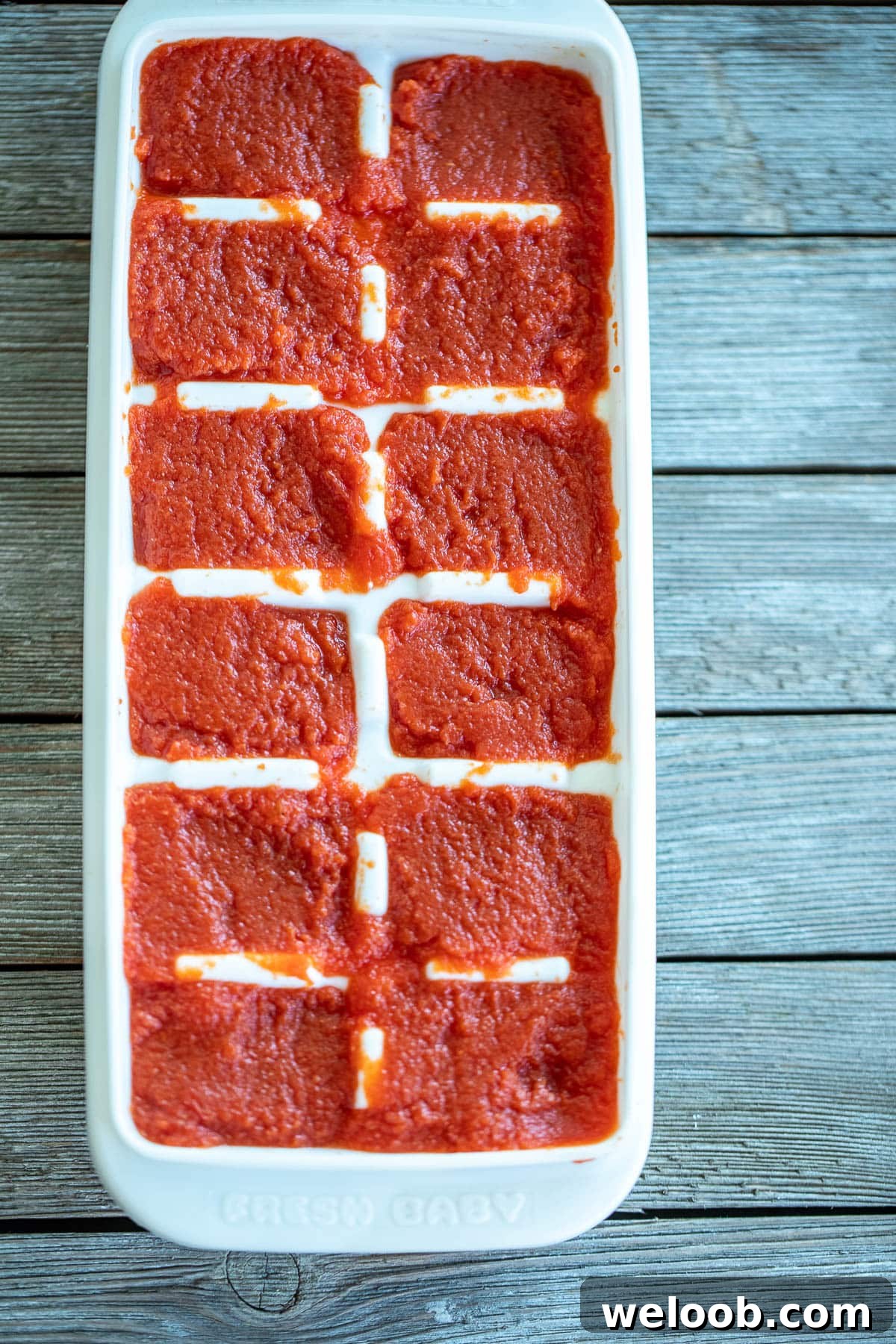
Ice Cube Method: Freeze the paste in an ice cube tray, then transfer cubes to a freezer bag or airtight container. Use within 2–3 months.
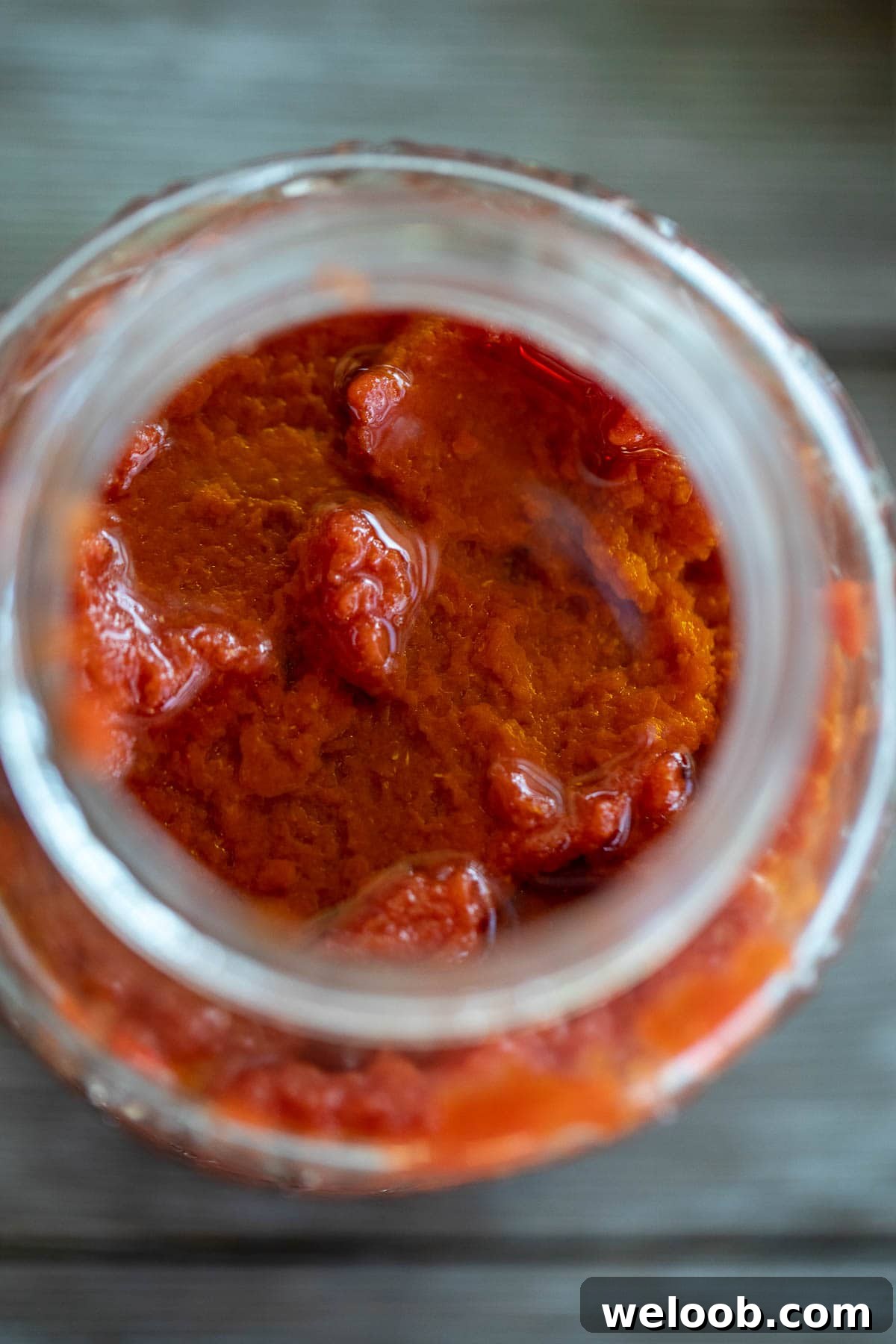
Olive Oil Method: Pack paste into mason jars up to three-quarters full, cover completely with olive oil, seal, and refrigerate for up to one week.
Canning: Canning is an excellent long-term option if you know proper canning procedures. Canning preserves the paste for much longer when done correctly.
For every 10 pounds of fresh tomatoes, you’ll get about 2 pounds of tomato paste.
Recipe Frequently Asked Questions
The best preservation methods are freezing or canning. Freeze in portions for convenience, or can using proper home-canning guidelines for long-term storage.
This recipe uses only fresh tomatoes. Other recipes or store-bought pastes may include oil, acidifiers, salt, or preservatives.
You can freeze tomato purée, but for the best results freeze after cooking it down into a paste. Frozen purée can be used for other purposes if you prefer.
More Tomato Recipes To Try
Tomato Fish Stew – Cameroonian Fish Stew (VIDEO)
Cucumber Tomato and Onion Salad
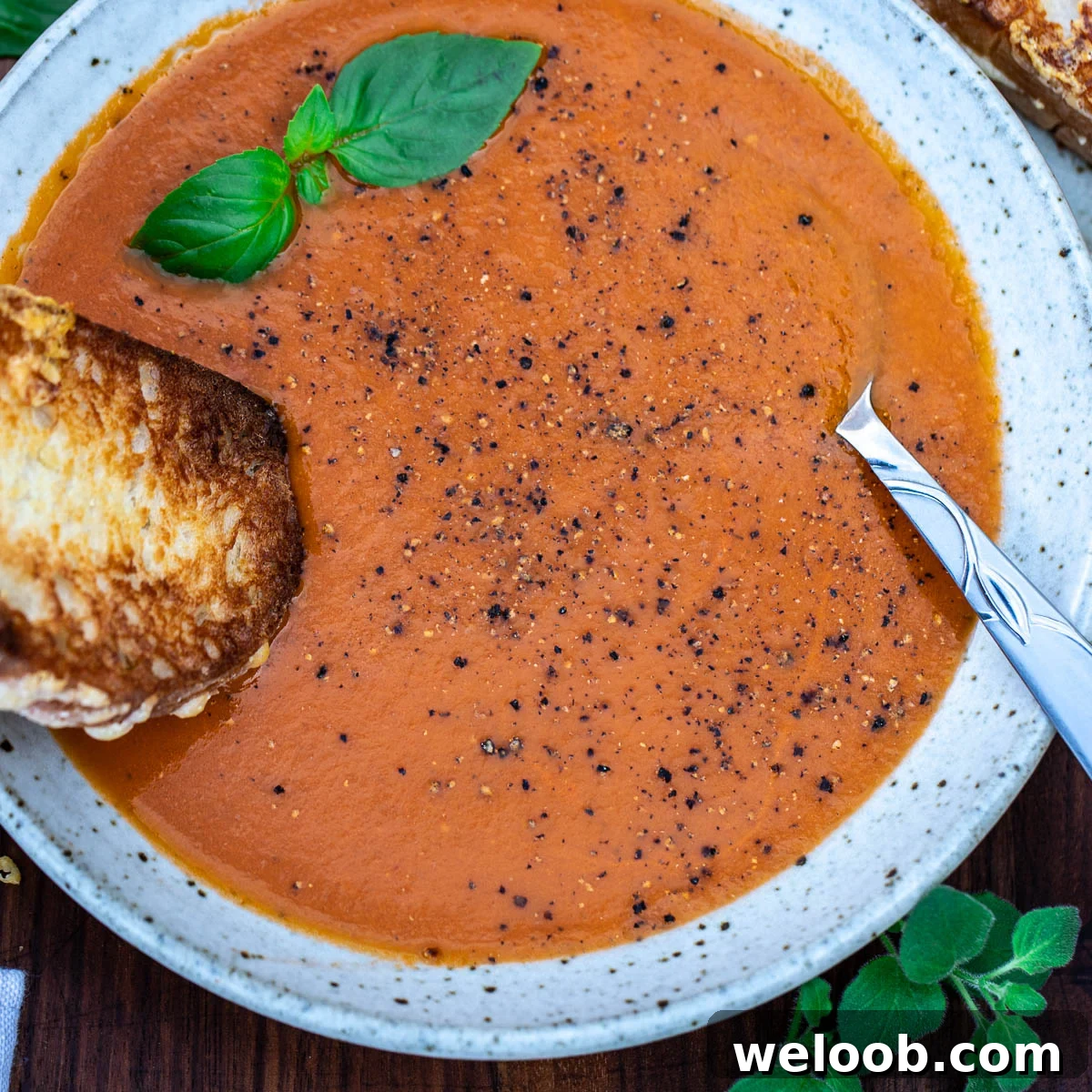
Roasted Tomato and Garlic Soup
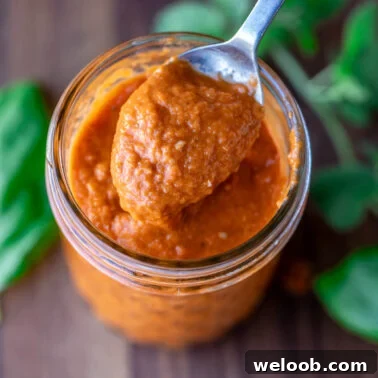
Roasted Tomato Pizza Sauce
If you make this recipe please leave a star rating below. Your rating helps others find the recipe and I love hearing from you. Thank you!
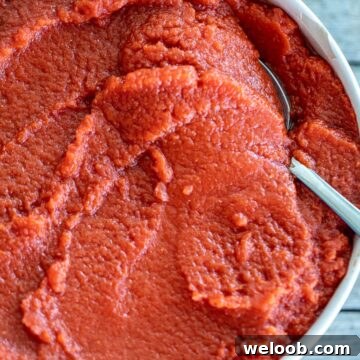
Homemade Tomato Paste
Pin Recipe
Rate
Print Recipe
Ingredients
- 10 pounds tomatoes
Instructions
-
Cut Tomatoes. Rinse tomatoes thoroughly then cut them into quarters.
-
Blend Tomatoes. Place the tomatoes in a blender and blend into a purée, working in batches if needed.
-
Sieve. Pass the blended purée through a fine-mesh sieve to remove seeds and remaining skin.
-
Cook Down To a Paste. Pour the sieved purée into a large pot and cook until reduced and thickened into tomato paste. Reduce heat as it thickens to prevent burning. The reduction can take 2–3 hours depending on heat and tomato water content.
-
Store. Freeze in portions, refrigerate under olive oil for short-term use, or can for long-term storage.
Notes
2. Storage methods:
Ice Cube Method: Freeze paste in an ice cube tray, then store cubes in freezer bags for 2–3 months.
Olive Oil Method: Fill jars three-quarters full, cover completely with olive oil, seal, and refrigerate up to one week.
Canning Method: You can also can tomato paste following standard home-canning procedures for best results.
3. Ten pounds of fresh tomatoes reduce to roughly two pounds of tomato paste.