
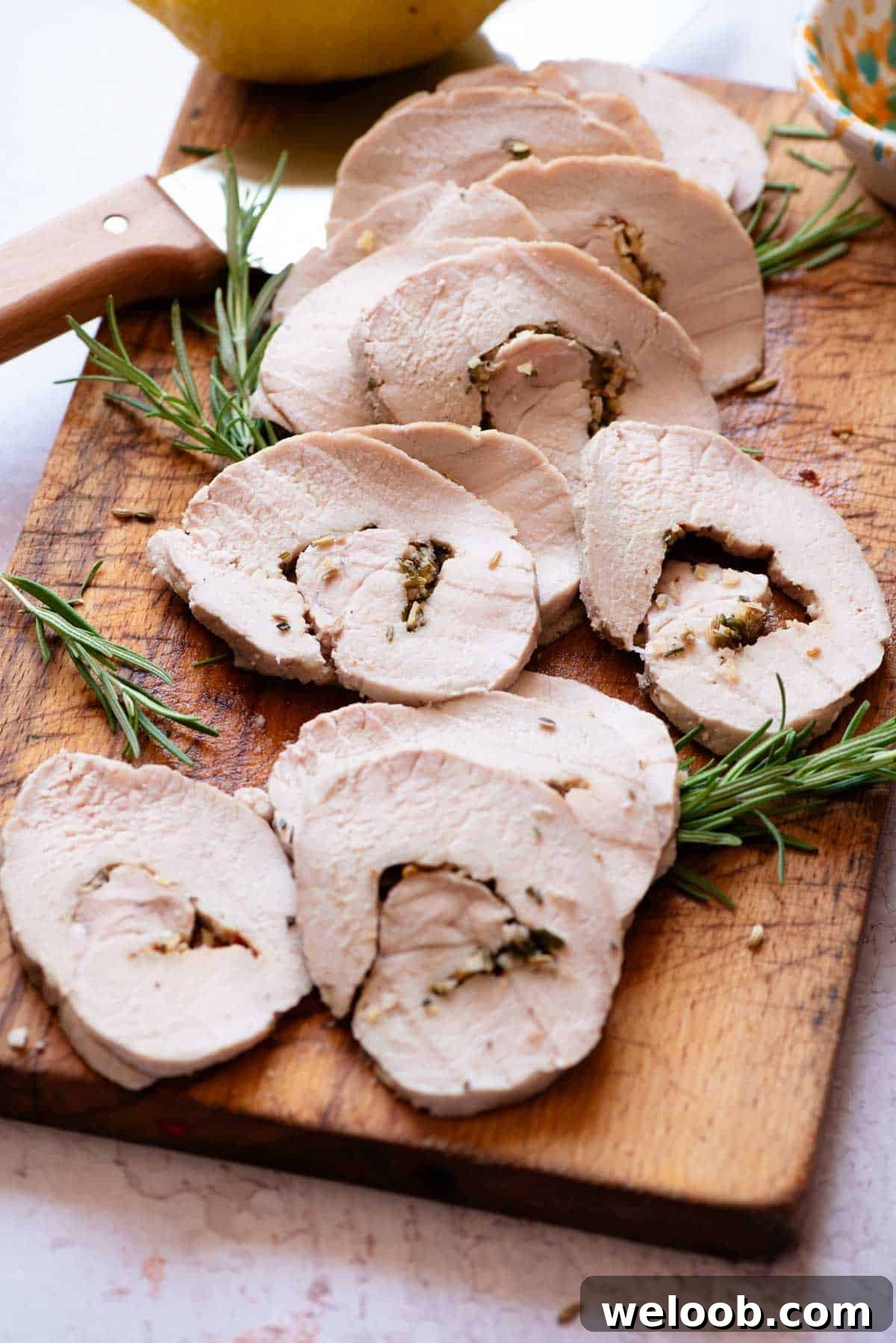
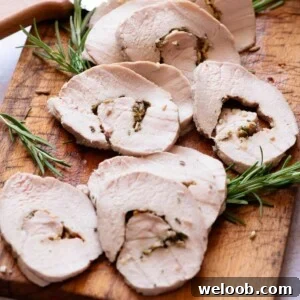
Learn how to make a flavorful Italian Roast Pork Loin stuffed with Amalfi lemon, fennel, white wine and garlic. Roasted until tender and juicy, this pork loin is bright with citrus, aromatic herbs and a hint of heat. Serve it with roast potatoes or your favourite Italian side dish for a satisfying meal.
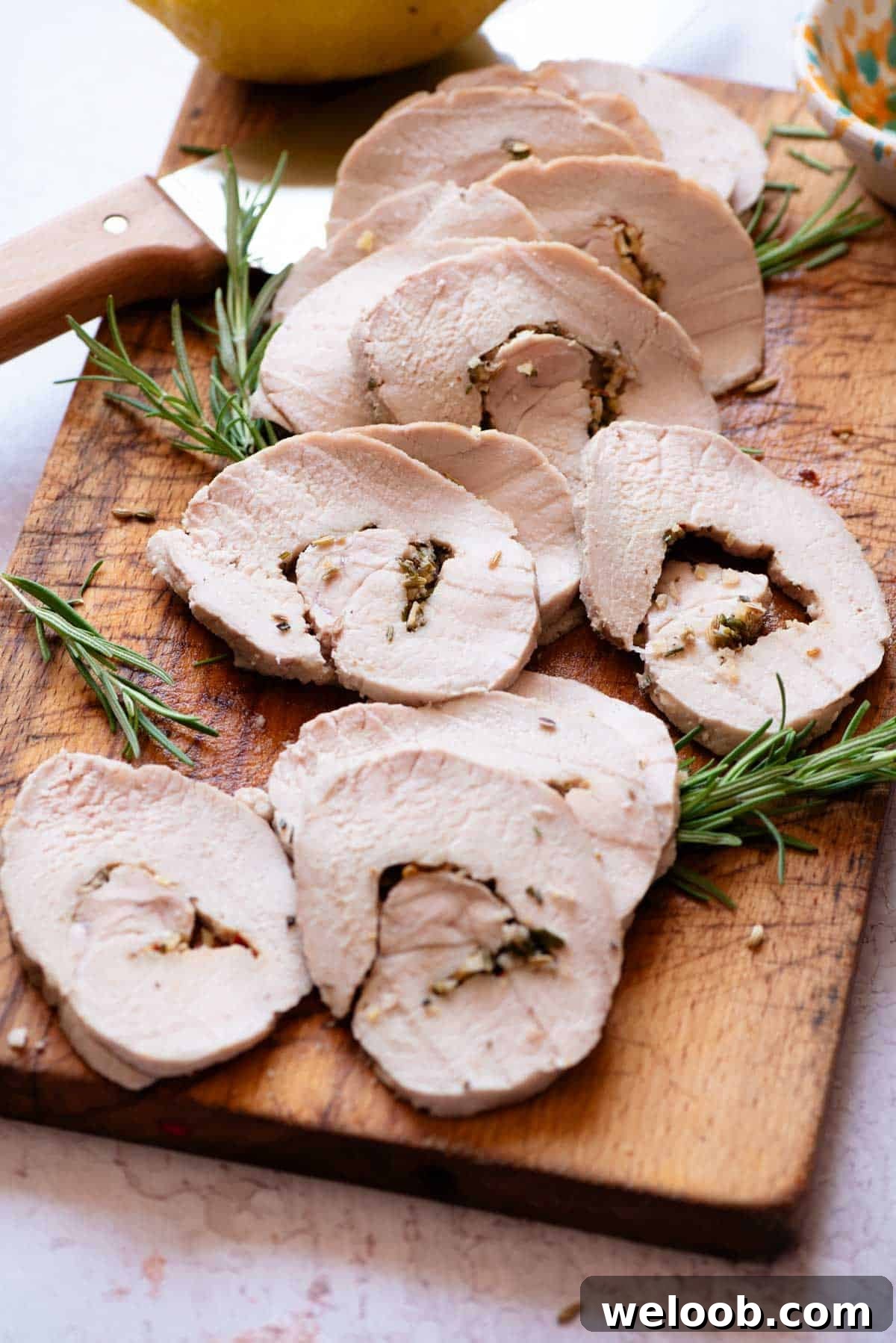
This Italian roast pork loin has been a repeat favourite. The combination of Amalfi lemon zest, rosemary, fennel seeds, garlic and a splash of white wine creates an intensely aromatic filling that keeps the meat moist and full of flavour.
The method is straightforward: trim and butterfly the loin, season and roll, tie and roast. The bright citrus and herb notes make this roast suitable year-round — elegant enough for guests and simple enough for a weeknight roast.
Suggested accompaniments include Italian roast potatoes, green beans and a fresh arugula salad for contrast and balance.
Scroll below for the full recipe, ingredient notes, step-by-step photos, useful tips, variations and a video demonstration. For a printable version see the recipe card near the bottom.
Ingredients
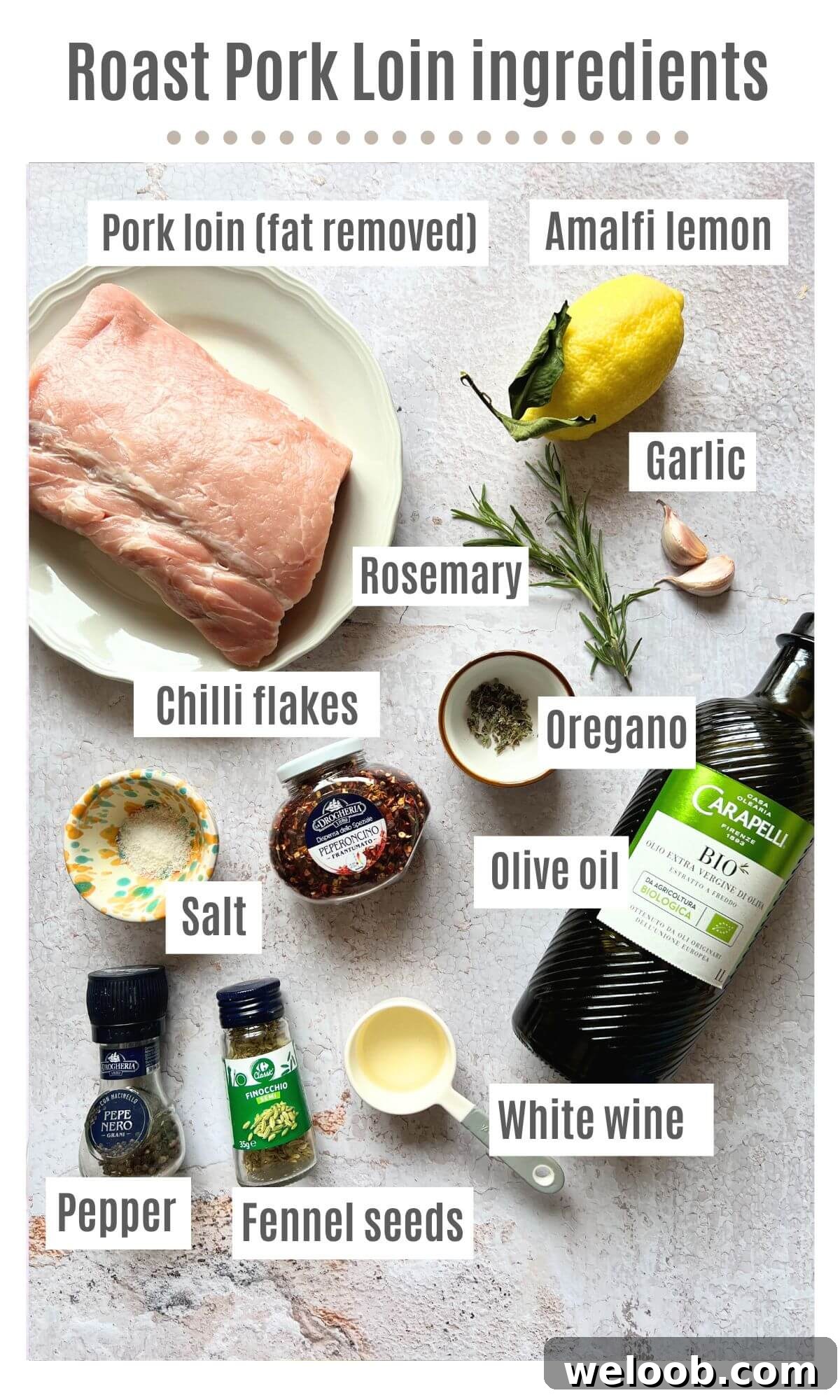
Ingredient notes and substitutions
- Pork loin: Use 1 kg (about 2 lbs) after the fat has been removed. If buying a loin with the fat cap still attached choose roughly 1.5 kg (3.3 lbs). Note that pork loin is a different cut from pork tenderloin, which cooks much faster.
- Lemons: Amalfi lemons are exceptionally fragrant, but any good-quality unwaxed lemon will work.
- Herbs & fennel: Fresh rosemary, dried oregano and fennel seeds give this roast its classic Italian flavour.
- Garlic: Use fresh garlic — avoid powdered garlic for the best flavour.
- White wine: A dry Italian white such as Vermentino, Pinot Grigio or Pecorino works well. Omit the wine if you prefer no alcohol.
Step by step photos and instructions
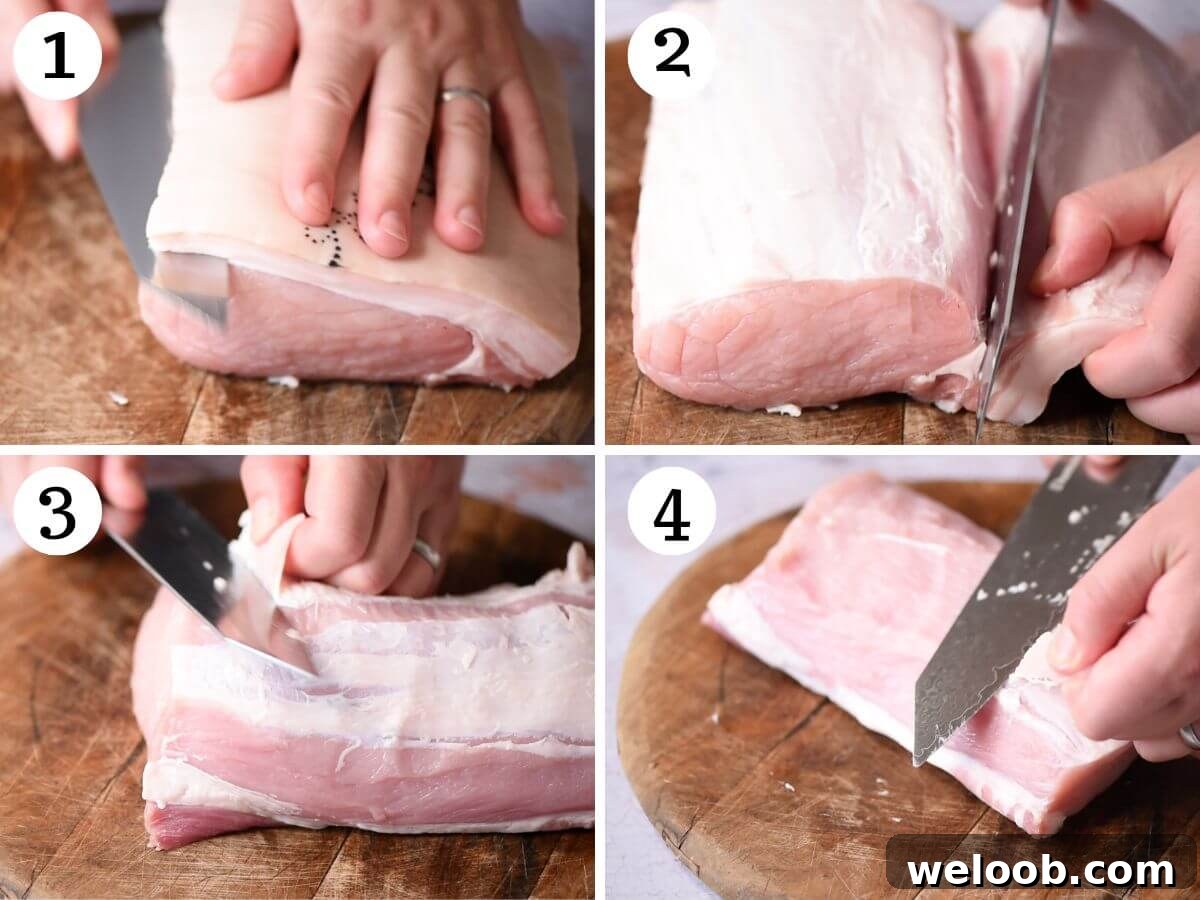
Remove fat: If your loin has a thick fat cap, trim it away with a sharp knife without cutting into the meat. Remove any remaining sinew (silver skin) so the seasoning can penetrate and the roll will hold its shape.
Prepare and season: Butterfly the pork by cutting down the middle lengthways so it opens like a book (keep it in one piece). Cover with plastic wrap and gently pound with a meat mallet or rolling pin to even the thickness and tenderise. Discard the plastic wrap.
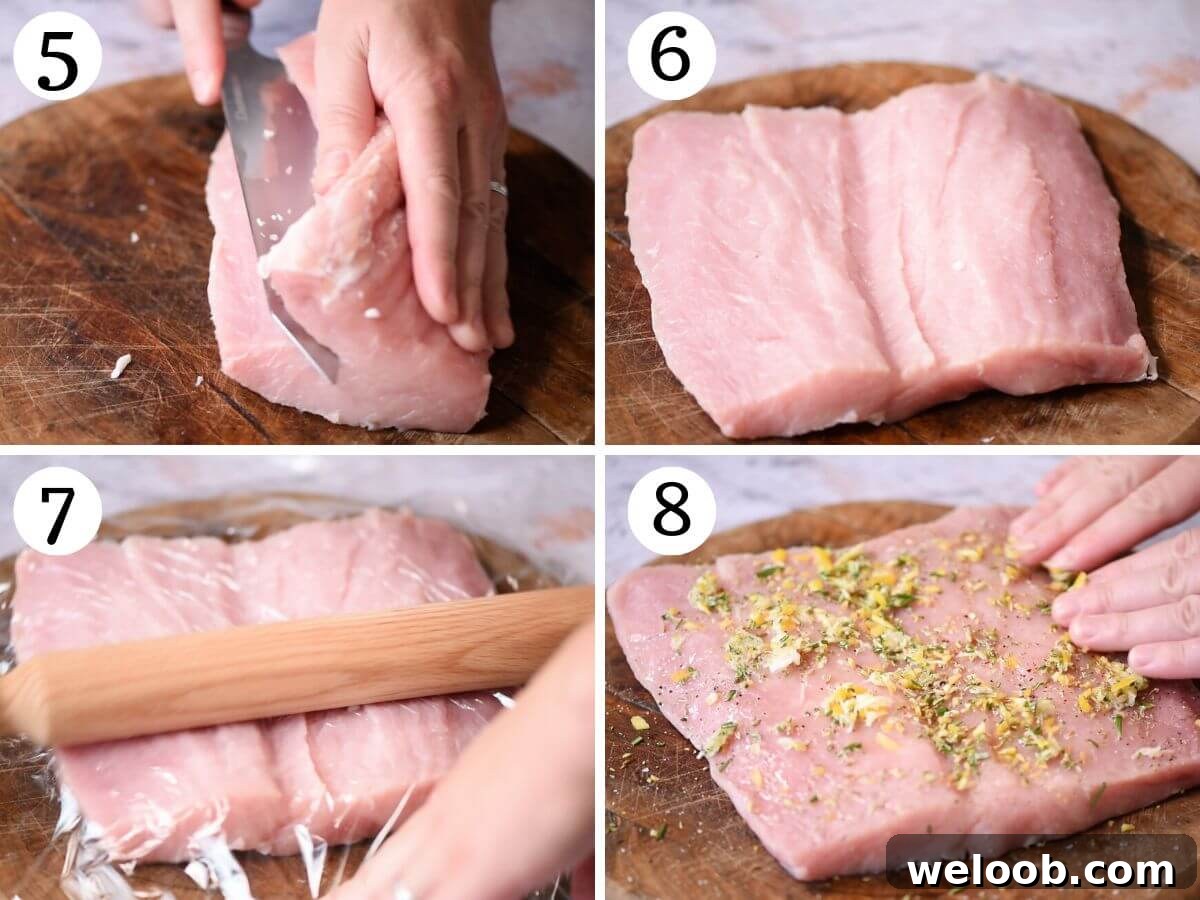
Finely chop lemon zest and rosemary together. Season the pork with sea salt flakes (or regular salt), then scatter the lemon-rosemary mix, grated garlic, oregano, red pepper flakes and a pinch of black pepper. Drizzle with white wine and a little olive oil, then rub the flavours evenly over the meat.
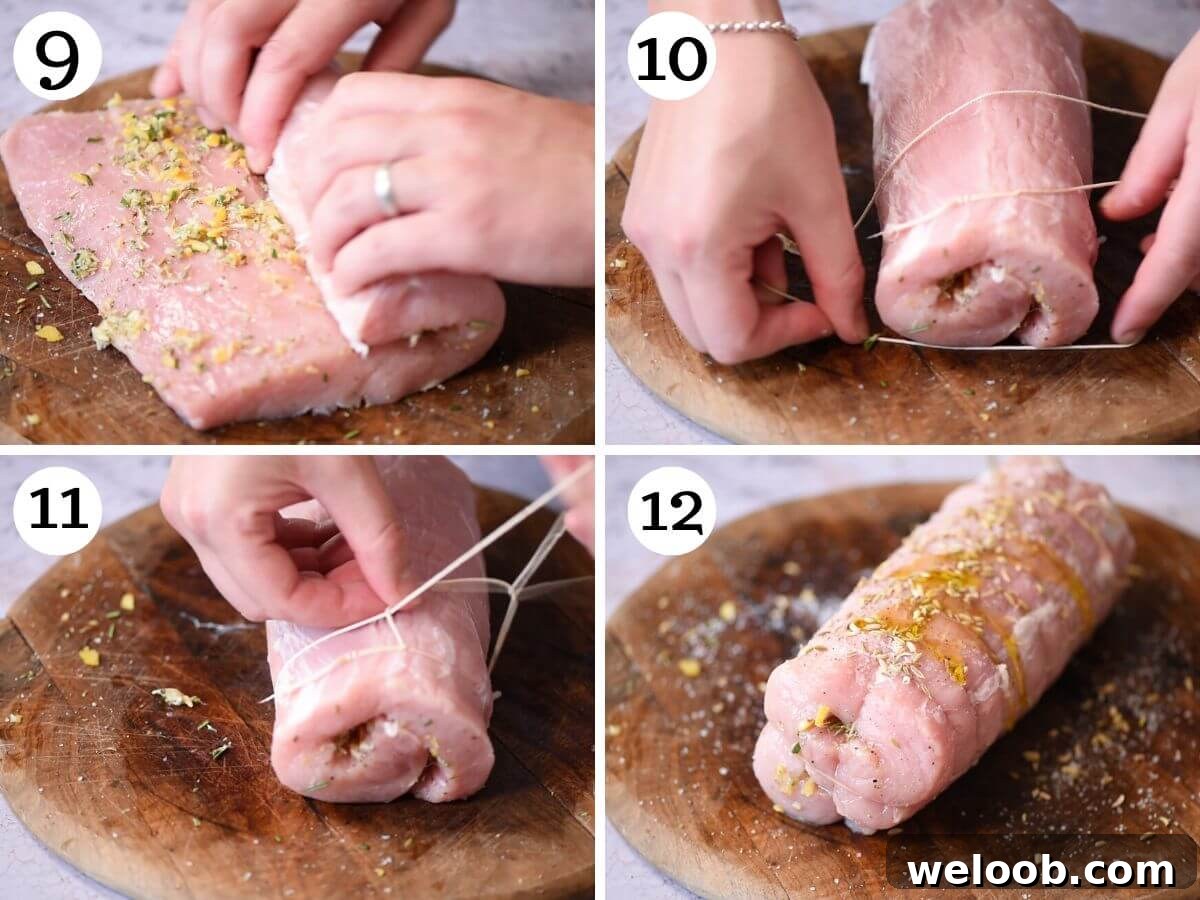
Roll and tie: Roll the pork tightly lengthways and secure it with kitchen string. Tie loops at each end and then across the loin about ½ inch apart to maintain shape.
Brush the outside with a little olive oil, sprinkle additional sea salt flakes and fennel seeds over the surface.
Tip: If you have time, refrigerate the rolled loin for 2 hours to overnight to deepen the flavours. It can also be roasted immediately.
Thickly slice one large onion (or two small) and arrange the slices in a roasting tin to form a bed for the pork. Place the tied loin on top and cover with dampened baking parchment to form a cartouche.
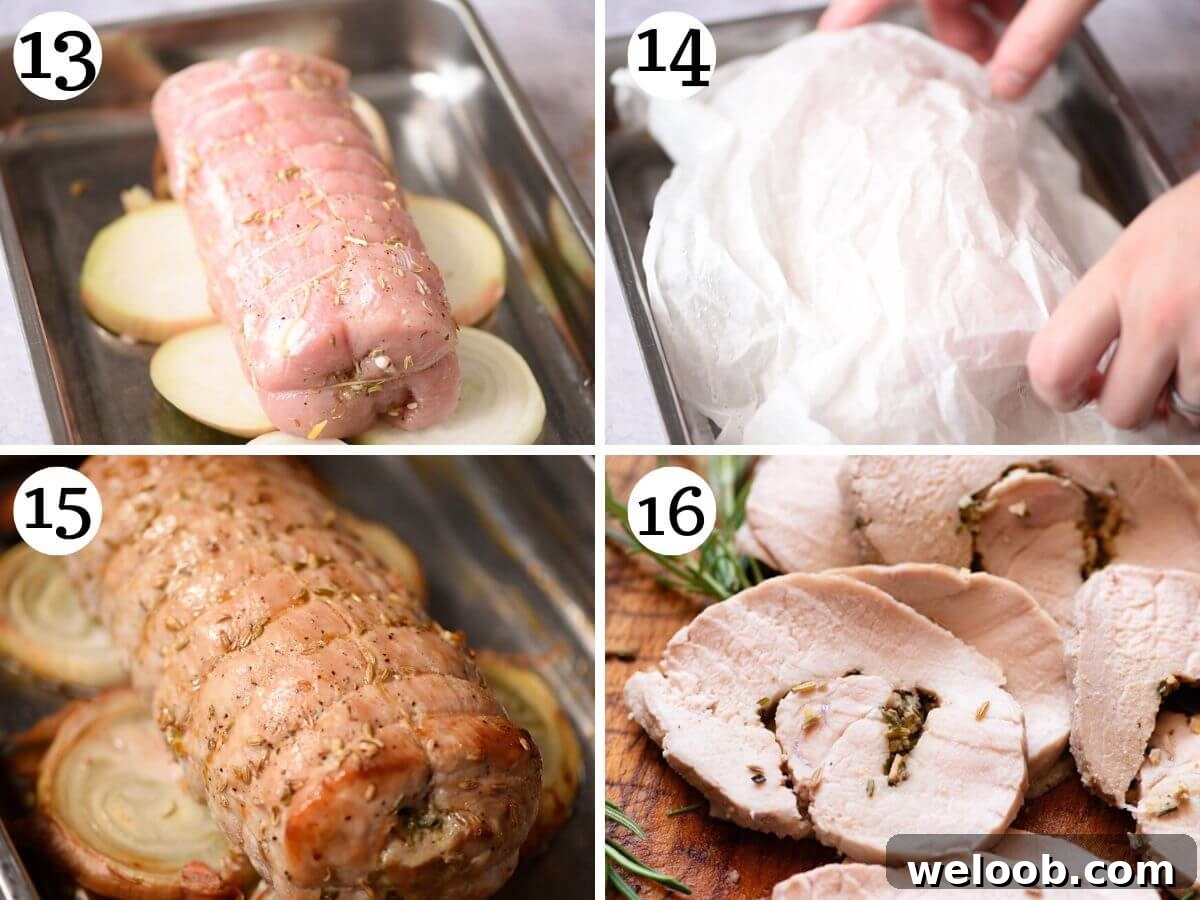
Roast at 180C (350F) for 30 minutes covered, then remove the parchment and roast uncovered for about 40 minutes more. Remove from the oven, tent with foil and let the meat rest for 20 minutes before slicing.
How to tie the pork
The simplest way
Tie a loop of string around each end of the loin, making sure the knots are snug but not cutting into the meat. Add additional loops spaced about ½ inch apart to hold the roll together.
The technical way (tighter, optional)
The more secure method uses a single long length of string to weave loops along the roll and then passes the string underneath to create evenly spaced knots. It produces a tighter, neater roast but isn’t essential — the simple loop method works well for most cooks.
Recipe tips
- Trimming sinew: Keep your knife blade level and use a sharp blade to remove silver skin without cutting into the meat.
- Onion bed: Thick onion slices lift the pork so it roasts evenly and add flavour to the pan juices.
- Baking parchment cartouche: Scrunch the parchment, run it briefly under cold water, then cover the pork to trap moisture while preventing overcooking.
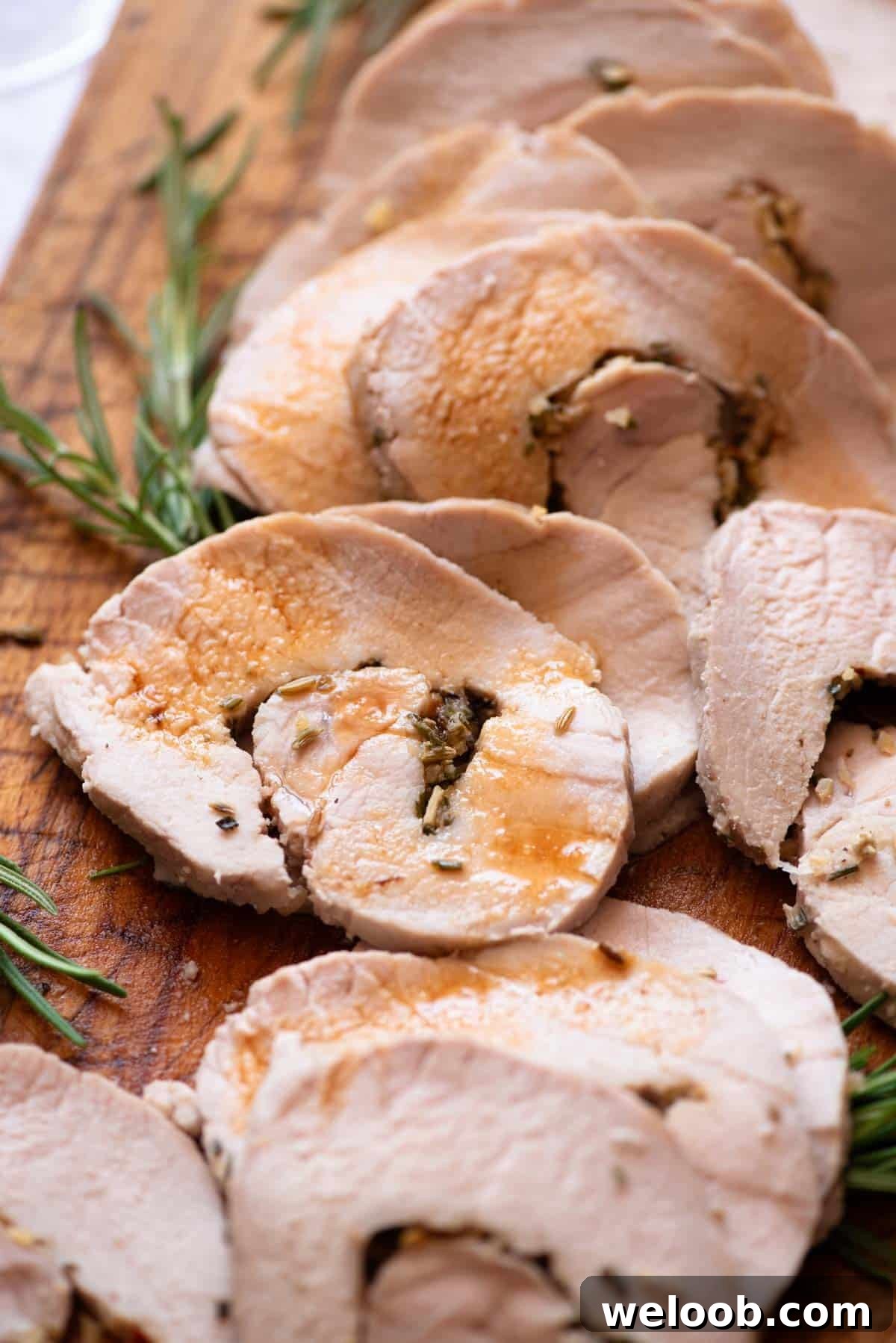
- Resting: Rest the roast for 20 minutes under foil to allow juices to redistribute, keeping slices moist when served.
Recipe FAQs
Sinew tightens during cooking and prevents the meat from cooking evenly. Removing it creates a lean surface that seasons better and results in a tender roast. If your butcher removes it, you can skip this step.
Yes. Arrange slices in an ovenproof dish, cover with foil and warm at 180C (350F) for about 10 minutes until heated through.
Store cooked pork in the refrigerator, covered, for 3–4 days.
Yes. Cooked pork freezes well; thaw before reheating and consume within recommended freezer storage times.
More Italian roasts to try
Mains
Italian Roast Beef with Marsala & Onions
Mains
Italian Meatloaf Wrapped in Pancetta (Polpettone)
Mains
Sausage & Chestnut Stuffed Turkey Breast
Mains
Stuffed Pork Tenderloin with Prosciutto & Pistachios
If you try this Italian Roast Pork Loin or any recipe from the blog, please rate it and leave a comment to share how it turned out. I enjoy hearing your feedback and tips from your kitchen.
Step By Step Photos Above
Recipes include step-by-step photos, helpful tips and often a video to guide you.
Italian Roast Pork Loin with Amalfi Lemon & Fennel
By Emily
Equipment
- Plastic wrap (cling film)
- Kitchen string
- Meat mallet or rolling pin
- A damp, crinkled piece of baking parchment for covering the pork
- Aluminium foil
Ingredients
- 1 kg pork loin (weight after fat removed)
- 1 pinch chilli flakes (red pepper flakes)
- ½ Amalfi lemon peel or other unwaxed lemon
- 1 tsp oregano
- 1 tsp rosemary, chopped
- 1 tsp fennel seeds
- 2 garlic cloves, finely grated or minced
- 1 large onion (or 2 small)
- 1 tbsp Italian white wine (Vermentino, Pinot Grigio or Pecorino)
- Olive oil
- Sea salt flakes and black pepper
Instructions
- Preheat the oven to 180C (350F).
- Butterfly the pork loin so it opens like a book, leaving it as one piece. Cover with plastic wrap and gently pound to even thickness, then discard the wrap.
- Finely chop lemon zest and rosemary together.
- Season the pork with sea salt, then sprinkle the lemon-rosemary mix, grated garlic, oregano, red pepper flakes and black pepper. Drizzle with 1 tsp white wine and a little olive oil, then rub to combine.
- Roll the pork tightly lengthways and secure with kitchen string. Tie loops along the length about ½ inch apart.
- Sprinkle the outside with sea salt flakes and fennel seeds, then drizzle with 1 tbsp olive oil and rub over the surface.
- If time allows, chill the rolled pork for 2 hours to overnight to let flavours develop. It can be roasted immediately if needed.
- Thickly slice the onion and arrange it in a roasting tin. Place the pork on top and cover with damp baking parchment.
- Roast for 30 minutes covered, then remove the parchment and roast uncovered for 40 minutes more.
- Remove from the oven, tent with foil and rest for 20 minutes before slicing and serving.
Video
Notes
- Pork weight: 1 kg (2 lbs) is the weight after fat removal. If buying with the fat cap, choose about 1.5 kg (3.3 lbs).
- Trimming sinew: Use a sharp knife held level to remove silver skin without cutting into the meat.
- Tying the pork: You can tie simple loops or use butcher’s knots for a tighter finish; either method will work.
- Onion bed: Thick onion slices help the pork roast evenly and add flavour to the pan juices.
- Baking parchment: Dampen scrunched parchment to form a cartouche that traps moisture while preventing overcooking.
- Resting: Rest the roast for 20 minutes to keep slices juicy.
- Storage & freezing: Refrigerate leftovers for 3–4 days or freeze for longer storage.
Helpful Info for All Recipes
- I typically use extra virgin olive oil unless stated otherwise.
- All vegetables are medium sized unless noted.
- Recipes are tested using a fan (convection) oven.
Nutrition
Carbohydrates: 1 g |
Protein: 37 g |
Fat: 7 g
Nutrition information is an approximation.
Leave a comment below!